
At Ethnic Infotech, we build and migrate stores on Shopify Plus, Adobe Commerce (Magento), and headless setups like GraphCommerce and Shopify Hydrogen every week, so this isn’t theoretical for us. This guide walks through the platforms that actually matter in 2026, who each one fits, and where we’ve seen brands get the decision wrong.
Fast answer:
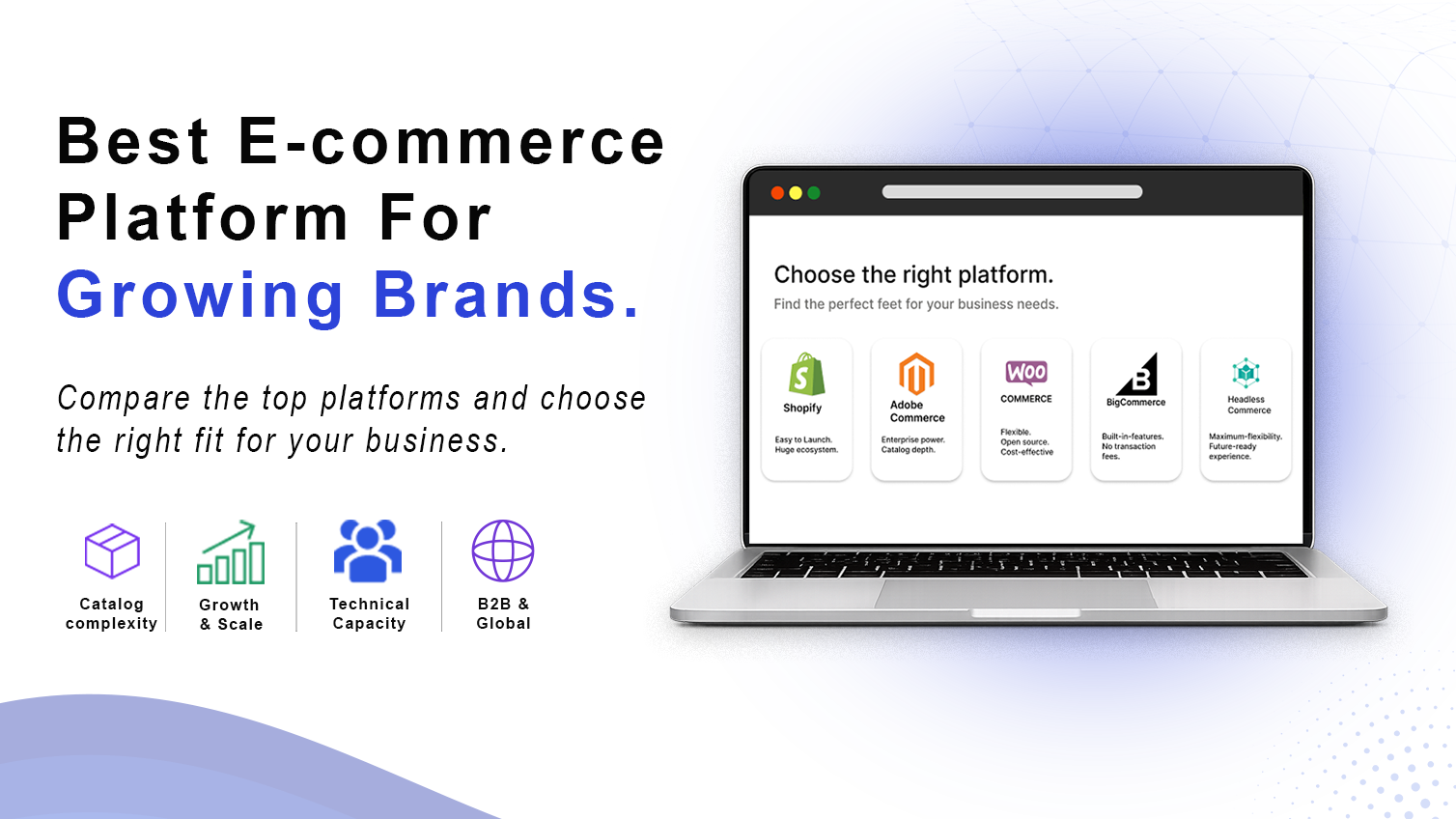
For most growing brands, the best ecommerce platform choice comes down to three real contenders: Shopify (fastest to launch, strongest app ecosystem), Adobe Commerce/Magento (best for complex catalogs, B2B pricing logic, and full control), and headless setups built on either (best when your frontend needs to move faster than your backend). WooCommerce and BigCommerce fill specific gaps below that tier. There is rarely a single “best” answer independent of your catalog size, budget, and team.
The Problem: Picking a Platform Without a Framework
Most merchants start this search by typing “best ecommerce platform 2026” into Google and reading five listicles that all rank the same six tools in a slightly different order. None of those lists know your order volume, your SKU count, whether you sell B2B and B2C from the same catalog, or whether your dev team is one freelancer or a five-person unit.
The result is predictable. A store with 40,000 SKUs and wholesale pricing logic ends up on a platform built for a 200-product Instagram brand, and it breaks within a year. Or the opposite happens: a small brand pays for enterprise infrastructure it doesn’t need for another three years, burning budget that should have gone to marketing.
What Actually Makes a Platform Right for You
Before comparing tools, it helps to name the variables that actually decide this, because they matter more than any feature list:
- Catalog complexity. A handful of simple products behaves very differently from a catalog with configurable variants, bundles, and tiered B2B pricing.
- Order volume and growth trajectory. A platform that’s comfortable at 500 orders a month can choke at 15,000.
- In-house technical capacity. Some platforms assume you have developers on staff. Others assume you don’t.
- Budget, both upfront and ongoing. Licensing, hosting, transaction fees, and developer time all add up differently on each platform.
- International and B2B requirements. Multi-currency, multi-language, and account-based pricing rule some platforms out immediately.
Keep these five in mind as you read the comparisons below. They’re the actual decision inputs, not the marketing copy on each platform’s homepage.
Best Ecommerce Platforms Compared: Shopify, Adobe Commerce, WooCommerce, BigCommerce, and Headless
Here’s the honest rundown of the platforms brands are actually choosing between in 2026, based on what we build and what the data shows.
Shopify: The Default Starting Point for Most Brands
Shopify now holds somewhere between 23% and 26% of global ecommerce platform market share depending on the methodology, and it’s still growing faster than almost every other large platform. According to Elogic Commerce’s enterprise platform research, Shopify Plus is now the largest platform among B2C companies doing above $50 million in annual GMV.
Shopify’s strength is speed to launch and a genuinely enormous app ecosystem. You can get a functional store live in weeks, not months. Shopify Plus adds custom checkout logic, B2B functionality, and higher API limits for brands that outgrow standard Shopify. We build a lot of Shopify Plus storefronts, migrations, and Hydrogen-based headless frontends on top of it, and the honest limitation is customization depth: for very complex catalog logic, you’ll eventually hit walls that Adobe Commerce doesn’t have.
Adobe Commerce (Magento): Built for Catalog Depth and Control
Adobe Commerce, which most of the industry still calls Magento out of habit, is the platform we reach for when a brand has serious catalog complexity, B2B pricing tiers, or needs full control over checkout and backend logic that hosted platforms restrict. It’s an enterprise ecommerce platform in the fullest sense: open architecture, no artificial ceilings on customization, and strong support for multi-store, multi-currency B2B operations.
The tradeoff is real: Magento needs a development team, ongoing maintenance, and a bigger upfront investment than Shopify. Overall Magento’s raw site count has been shrinking – by one recent measure it fell close to 19% year over year as Adobe’s enterprise pricing pushed smaller merchants elsewhere – but that decline is concentrated at the bottom of the market. Among B2B companies doing $50 million-plus in GMV, Adobe Commerce still leads. That’s the segment where the platform’s depth actually pays off.
Headless Commerce: Decoupling the Frontend From the Backend
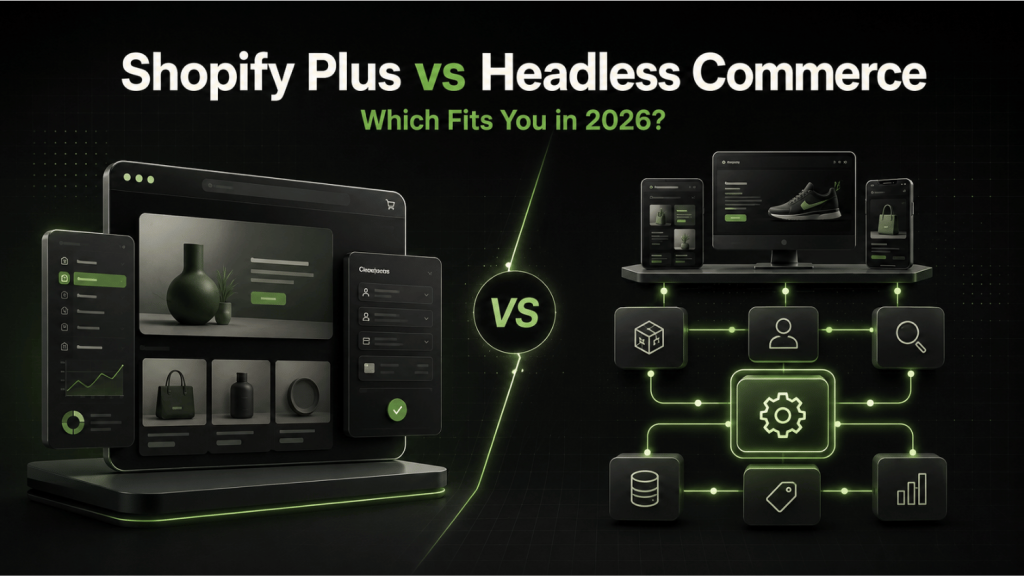
Headless setups, built on GraphCommerce, Shopify Hydrogen, or similar frameworks, separate your storefront (what customers see) from your commerce backend (inventory, orders, pricing). The appeal is speed and flexibility: your frontend team can ship a new storefront experience without touching backend logic, and page performance is typically much faster than a traditional themed store.
We replatformed Tong Garden’s storefront from Magento to GraphCommerce, and the project’s whole point was reducing storefront overhead while keeping the backend commerce logic intact. Headless isn’t the right starting point for every brand – it adds architectural complexity you don’t need on day one – but for brands with catalog depth and a frontend team that wants independence, it’s increasingly the answer.
WooCommerce: The Ecommerce Platform for Small Business Teams Already on WordPress
WooCommerce still runs more individual websites than any other platform, largely because it’s free, open source, and sits on top of WordPress, which already powers a huge share of the web. If you’re already running a WordPress site and want to add commerce without a full replatform, WooCommerce is the lowest-friction path.
It’s a genuinely solid ecommerce platform for small business owners with modest catalogs and WordPress familiarity already on the team. Where it struggles is scale: as order volume and plugin count climb, WooCommerce sites tend to need more hands-on maintenance than a hosted platform like Shopify.
BigCommerce: The Middle Ground
BigCommerce targets the same mid-market brands Shopify does, with one structural difference worth knowing: no transaction fees on any plan, and more native functionality out of the box before you need apps. It’s worth a look for brands that find Shopify’s app-dependency model gets expensive fast, though its ecosystem and talent pool are smaller than Shopify’s.
Wix and Squarespace Commerce: Fine for Very Small Catalogs
Both platforms have grown their ecommerce share steadily, and they’re genuinely fine choices for a brand with a small catalog, simple shipping needs, and no B2B complexity. Neither is built for the catalog depth or B2B logic that Adobe Commerce or Shopify Plus handle, so brands tend to outgrow them the moment order volume or SKU count climbs.
What We’ve Seen Building These Platforms for Real Brands
Numbers on a comparison chart only tell half the story. Here’s what actually happens once a brand picks a platform and lives with it.
Zolamod, a modular gaming furniture brand, launched on Shopify to showcase premium product storytelling and a flexible buying journey around made-to-order tabletop pieces. Shopify’s speed to launch and theme flexibility fit a brand that needed to move fast and iterate on product presentation without a large dev team involved in every change.
Bedstar, a UK bed and mattress retailer, and Blue Lagoon, a Netherlands-based reptile retailer, both run on Adobe Commerce. Bedstar needed clearer catalog discovery and stronger delivery and finance visibility across a large product range – the kind of operational complexity that a hosted platform starts to strain against. Blue Lagoon’s project involved a full data migration and checkout rework, which is exactly the situation where Magento’s open architecture earns its higher setup cost.
Tong Garden’s move from Magento to a GraphCommerce headless frontend, done in partnership with Thirteen Ideation, is the clearest example we have of headless paying off: the backend commerce logic stayed put, and the storefront got faster and lighter without a full backend replatform.
The pattern across all three: the platform decision followed the operational reality, not the other way around. Nobody picked Adobe Commerce because it sounded impressive on a pitch deck – they picked it because their catalog and finance workflows needed it.
How to Actually Decide: A Practical Framework
This is an ecommerce platform comparison you can actually apply, not just read.
| Platform | Best For | Setup Cost | Dev Team Needed | Typical Fit |
|---|---|---|---|---|
| Shopify / Shopify Plus | Fast launch, strong app ecosystem, B2C brands scaling quickly | Low to moderate | Optional at entry level | Startups through $50M+ B2C brands |
| Adobe Commerce (Magento) | Complex catalogs, B2B pricing, full backend control | High | Required | Enterprise B2C and B2B, $10M+ GMV |
| Headless (GraphCommerce / Hydrogen) | Frontend speed and flexibility on top of an existing backend | Moderate to high | Required | Brands with catalog depth and a frontend team |
| WooCommerce | Small catalogs already on WordPress | Low | Optional early, needed at scale | Small business, WordPress-first teams |
| BigCommerce | No transaction fees, more native features out of the box | Low to moderate | Optional | Mid-market brands avoiding app sprawl |
| Wix / Squarespace | Very small catalogs, no B2B complexity | Very low | Not needed | Early-stage or hobby stores |
A few practical rules we give clients directly:
- If your catalog fits comfortably under 5,000 SKUs and you don’t need custom B2B pricing logic, start on Shopify. You can always migrate later, and starting simple beats over-building.
- If you already know you need multi-store, multi-currency B2B logic, skip the “start small and migrate” advice. Go straight to Adobe Commerce and save yourself a migration project in eighteen months.
- If your storefront needs to move faster than your backend team can ship changes, headless is worth the added complexity. If it doesn’t, it’s added complexity for no reason.
- Don’t choose based on which platform your competitor uses. Their catalog, team, and budget aren’t yours.
Common Mistakes Brands Make When Choosing a Platform
Choosing based on price alone: Adobe Commerce Open Source is technically free to license, but hosting, development, and maintenance costs usually make it more expensive overall than Shopify for a small catalog. Price the whole stack, not just the license.
Underestimating migration cost when catalog data is messy: We’ve seen more than one project where the platform itself wasn’t the problem – years of inconsistent product data, duplicate SKUs, and undocumented custom fields were. Clean your data before you migrate, on any platform.
Picking headless before you actually need it: Headless adds real architectural overhead. If your current storefront isn’t the bottleneck, replatforming to headless won’t fix whatever actually is.
Ignoring B2B requirements until after launch: Retrofitting account-based pricing, quote workflows, or tiered wholesale logic onto a platform that wasn’t built for it is far more expensive than planning for it up front.
Assuming “best ecommerce platform” means the same thing for every business: It doesn’t. The best platform for online store operators selling wholesale is rarely the same platform that’s best for a DTC brand with a simple catalog.
FAQ
What is the best ecommerce platform for a small business just starting out?
For most small businesses with a straightforward catalog, Shopify is usually the fastest and lowest-friction starting point. If you’re already running WordPress, WooCommerce is a close second and avoids adding a new system.
How do I choose the right ecommerce platform for my store?
Start with catalog complexity, expected order volume, whether you need B2B pricing, and your in-house development capacity. Those four factors rule out most of the options before you even compare features.
Is Adobe Commerce (Magento) worth the higher setup cost?
Usually, yes, if you have real catalog complexity, B2B pricing needs, or plan to scale past what a hosted platform comfortably handles. For a small, simple catalog, it’s overkill.
How much does it cost to build on an enterprise ecommerce platform?
It varies widely by scope, but Adobe Commerce and Shopify Plus implementations typically run from the low tens of thousands into six figures depending on catalog size, integrations, and custom functionality required.
Can I switch platforms later if I start on Shopify?
Yes, and it’s common. Many brands start on Shopify, prove the business model, and migrate to Adobe Commerce or a headless setup once catalog complexity or B2B needs outgrow the platform.
Does headless commerce actually improve site speed?
In most cases, yes, since the frontend isn’t rendering through the platform’s default theme engine. The gain is most noticeable on large catalogs and image-heavy storefronts.
Why did Magento’s market share drop so much recently?
Adobe’s enterprise pricing shift pushed a chunk of smaller merchants toward Shopify and BigCommerce, which shows up clearly in site-count data even though Adobe Commerce has actually held or grown its share among the largest B2B merchants.
What’s the best ecommerce platform for a brand selling internationally in 2026?
Shopify Plus and Adobe Commerce both handle multi-currency and multi-language well. Which one fits depends on catalog complexity and whether B2B logic is involved – the same framework as everything else in this guide.
The Bottom Line
There’s no universal best ecommerce platform, only the right one for your catalog, your team, and where your business is headed in the next two to three years. Shopify wins on speed and ecosystem. Adobe Commerce wins on depth and control. Headless wins when your frontend ambitions outpace your backend. Match the platform to the operational reality, not the hype, and the rest of the decisions get a lot easier.
If you’re still weighing options, go deeper into our guide on what Magento is called now and why it matters for planning, or browse real platform migrations and builds we’ve delivered for brands in similar spots or check our full library of platform and migration resources for more context before you decide.
Ready to talk through your specific catalog and growth plan?
Pragnesh and the team at Ethnic Infotech work through exactly this decision with brands every week, across Shopify development, Magento development, Adobe Commerce development, and headless commerce builds. If you’re stuck between two platforms, reach out – we’ll tell you honestly which one fits, even if it’s not the one we’d make the most money building.
Planning your next product, platform, or growth move?
Ethnic Infotech helps teams shape scalable software, sharper customer experiences, and content systems that support real business growth.