

Hire Adobe Commerce Developers
Experienced Adobe Commerce developers who work as an extension of your team
Enterprise and B2B roadmaps rarely fit a single in-house team, and a search for Adobe Commerce specialists can take months. We provide dedicated Adobe Commerce developers who join your sprints, your tools, and your repo, scoped to your actual backlog rather than a fixed package.
- Adobe Commerce on Cloud and on-premises projects
- B2B, multi-store, and integration depth
- Work inside your existing tools, sprints, and repo
Overview
Adobe Commerce depth, added to your team on your terms
Hiring Adobe Commerce developers should add capacity to your roadmap without handing the platform to a vendor you cannot see into. You keep direction over priorities; we bring the Adobe Commerce experience and the hands to build.
What does it mean to hire Adobe Commerce developers?
Hiring Adobe Commerce developers means adding engineers who already know Adobe Commerce, as a dedicated team, embedded staff, a scoped project, or a support retainer. It is a way to add that capacity without the time and cost of an in-house search, while you keep day-to-day direction of the work.
Adobe Commerce is the commercial edition of Magento, and it runs in more than one way: on Adobe's cloud infrastructure, on-premises, or as the newer Adobe Commerce as a Cloud Service. Each changes where customization lives, so the right hire has to know which one you are on. Our guide to what Magento Commerce is called now sorts out the names.
This is a staffing model, not a fixed-scope project. For a scoped build instead, see our Adobe Commerce Development and Adobe Commerce Migration Services pages.
Why Teams Hire Us
Common reasons to bring in dedicated Adobe Commerce developers
A hiring decision like this is usually triggered by a specific, recognizable gap rather than a general staffing preference.
Roadmap Outpacing Capacity
The backlog keeps growing faster than the current team can realistically ship it.
In-House Hiring Takes Too Long
A search for Adobe Commerce specialists can take months the roadmap does not have.
B2B Requirements Keep Growing
Company accounts, quotes and approvals, and customer-specific pricing need people who have built them before.
Multi-Store Rollouts Need Ownership
Multiple brands, regions, and storefronts add configuration and release complexity.
Customizations Need a Plan
On Adobe Commerce as a Cloud Service, custom logic runs out of process, so existing PHP customizations need a deliberate plan.
Upgrades and Patches Slip
Adobe publishes end-of-support dates for every release, and older versions eventually run out of road.
Integrations Need an Owner
ERP, CRM, payment, and logistics systems all connect through APIs, and each needs someone accountable.
Continuity Across Releases
The same developers should still know your platform months later, not restart context each time.
Ways To Hire
Engagement models for adding Adobe Commerce capacity
Scope and team size are agreed around your actual gap, not a fixed package. No rates are shown here, because a number quoted before we see your platform would be a guess.
Dedicated Team
Developers working only on your platform, for continuous delivery against a standing roadmap.
Staff Augmentation
One or two Adobe Commerce developers join your in-house team, follow your processes, and work alongside your own engineers.
Project-Based Engagement
A defined scope against written milestones, such as a build, a migration, or a feature, then roll off or move to support.
Support & Optimization
A retainer for ongoing fixes, upgrades, and performance work after launch.
What Our Developers Do
Six areas our Adobe Commerce developers cover
Hire for one focused gap or standing capacity across the whole platform. It is the same team either way.
Enterprise
B2B & Enterprise Workflows
Business buyers expect account structures, approvals, and negotiated pricing, and Adobe Commerce supports B2B models that need configuring, extending, and testing.
- Company account structures
- Quote and approval processes
- Customer-specific pricing and ordering
- Multi-store setups for brands and regions
Backend
Custom Modules & Extensions
Business-specific logic built to be upgrade-safe, plus fixes and replacements for extensions that cause conflicts.
- Custom checkout features
- Admin workflow enhancements
- Catalog, pricing, and promotion logic
- Extension review, conflict fixes, and replacement
Not sure what is in your codebase? Start with a Magento Code Audit →
Platform
Cloud, App Builder & API Mesh
Where customization lives depends on how you run Adobe Commerce. On Adobe Commerce on Cloud you can customize in PHP and out of process. On Adobe Commerce as a Cloud Service, custom logic runs out of process only, through App Builder, API Mesh, events, and webhooks.
- Assessing existing customizations for Adobe Commerce as a Cloud Service
- App Builder applications, events, and webhooks
- API Mesh to combine APIs behind one GraphQL endpoint
- Adobe Commerce on Cloud configuration and deployment
Read our guides to Adobe Commerce as a Cloud Service and App Builder and Adobe API Mesh →
Connected Systems
Integrations & ERP Sync
Two-way synchronization with ERP, CRM, payment, and logistics systems, so inventory, orders, and pricing stay accurate without manual re-entry.
- ERP and CRM two-way sync
- Payment and shipping connections
- Custom middleware where no ready-made connector exists
- Data mapping, error handling, and testing for each connection
Speed
Performance & Peak Readiness
Indexing, caching, query, and frontend work aimed at faster pages and a steadier checkout ahead of busy periods, without promising specific results.
- Indexer and cache review
- Slow query and module profiling
- Frontend weight and image delivery
- Core Web Vitals baselines from real-user data
See Magento Speed Optimization and our Magento page speed guide →
Lifecycle
Upgrades, Migration & Support
Version upgrades, security patches, migrations onto Adobe Commerce, and the long-term support that keeps a platform stable.
- Adobe Commerce version upgrades
- Security patch and extension update testing
- Migration onto Adobe Commerce from Magento or other platforms
- Long-term maintenance and support retainers
Adobe publishes end-of-support dates for every Adobe Commerce release. See Adobe Commerce Migration Services and Magento Maintenance →
Either Offering
Developers for Adobe Commerce on Cloud or the Cloud Service
Hire for the platform you run. The same team works across both and flags what changes between them.
Managed PaaS, with PHP and out-of-process options
A cloud-native, fully managed platform-as-a-service that supports PHP customization as well as out-of-process extensibility with APIs, events, and App Builder.
- You have existing PHP customizations
- Both in-process and out-of-process work are needed
- Upgrades and patches stay on your roadmap
Versionless SaaS, with out-of-process customization
A managed, versionless SaaS platform where custom logic runs out of process through App Builder, API Mesh, events, and webhooks, and storefronts are rebuilt on Edge Delivery Services, per Adobe's migration overview.
- Customizations are rebuilt as App Builder apps
- The storefront moves to Edge Delivery Services
- Adobe runs the platform updates
Adobe Commerce also runs on-premises. Not sure which fits? Read our guide to Adobe Commerce as a Cloud Service, and we recommend a path after scoping.
How It Works
A clear path from first call to shipping alongside you
The same four stages apply regardless of team size.
Scope
We review your Adobe Commerce version and offering, customizations, integrations, and the gap you are filling, then recommend a model.
Output: Recommended fitMatch
You meet the specific developers proposed and approve the fit before anything starts.
Output: Confirmed teamEmbed
Developers join your standups, sprints, and repository, with a visible shared backlog.
Output: Active sprint cycleScale
Flex the team up or down as the roadmap shifts, without losing platform context.
Output: Adjusted capacitySelected Work
Real Magento projects delivered by Ethnic Infotech
Our published case studies list their platform as Magento, not Adobe Commerce specifically, so we show them as the Magento delivery that Adobe Commerce builds on. We do not currently feature an Adobe Commerce-specific case study here. None publishes measured results, so none are shown.

Fusion5
A Magento modernization project for a technology and electronics brand, focused on product discovery, smoother browsing, catalog management, and a faster mobile experience.
View Case Study →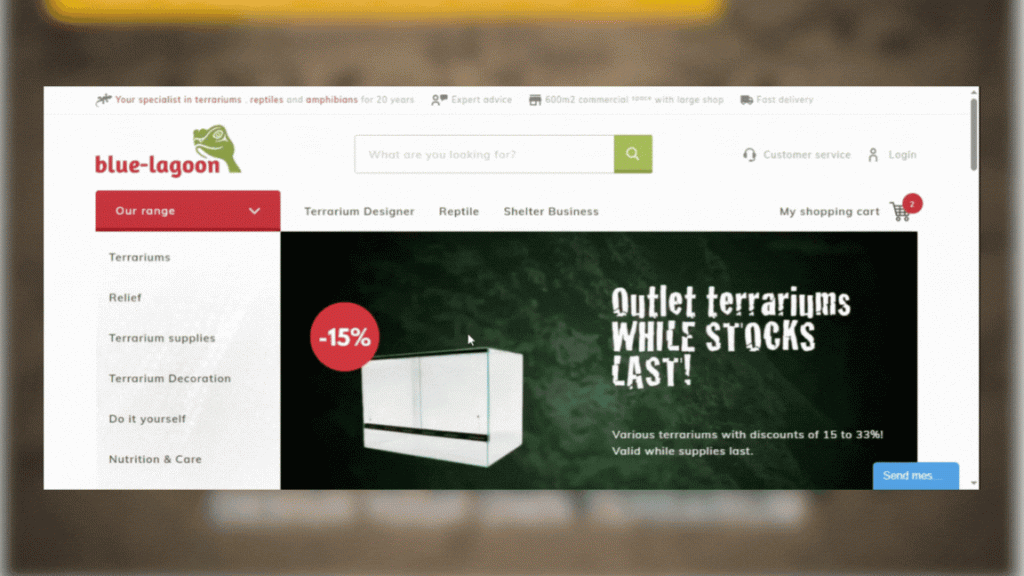
Blue Lagoon
Magento delivery for a Netherlands-based reptile retailer, focused on smoother catalog discovery, safer storefront operations, and a clearer checkout experience.
View Case Study →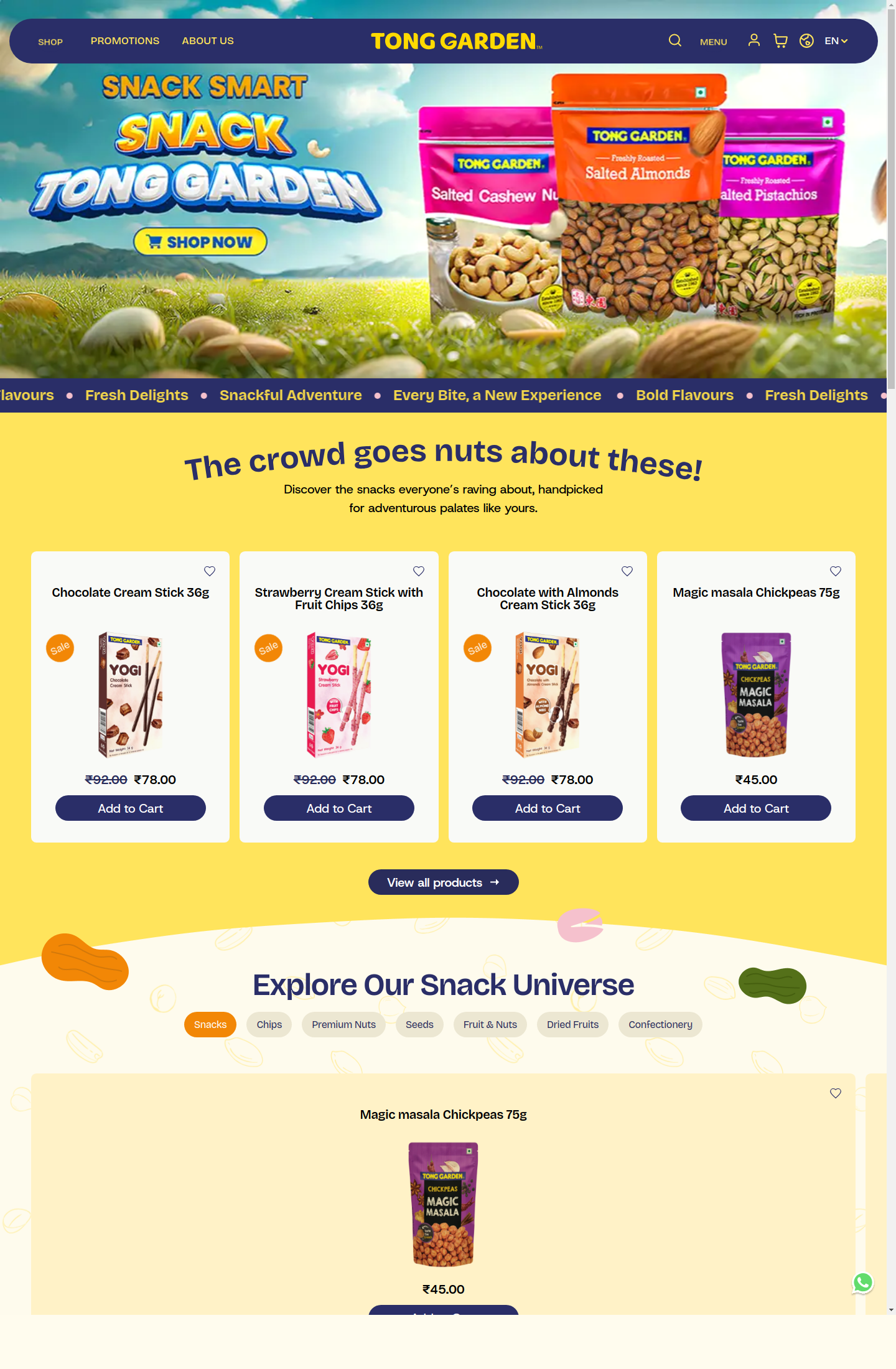
Tong Garden
A GraphCommerce storefront on a Magento backend for a snack brand's India store, built in partnership with Thirteen Ideation.
View Case Study →Why Ethnic?
Developers who behave like staff, not a vendor
We connect Adobe Commerce depth, existing-tool compatibility, and flexible team size into one accountable engagement.
- Magento and Adobe Commerce capability in the same team
- Work inside your existing tools and process, not a separate one
- You keep day-to-day direction of the work
- Team size flexes with the roadmap, up or down
- Continuity across releases instead of re-onboarding each time
- Honest scoping, and plain about what proof we can and cannot show
Related Services
Connect hiring with the wider Adobe Commerce roadmap
Use a dedicated developer alongside a scoped project when the work calls for both.
Frequently Asked Questions
Hiring Adobe Commerce developers FAQs
Direct answers about platforms, B2B, certification, proof, and flexibility.
What does it mean to hire Adobe Commerce developers?
It means adding engineers who already know Adobe Commerce to your team, as a dedicated team, embedded staff, a scoped project, or a support retainer, without running an in-house search. You keep direction of priorities, and we handle the engineering and continuity.
How do we choose between Adobe Commerce, Magento Open Source, and the Cloud Service?
They differ in licensing, hosting, and where customization lives. Adobe Commerce on Cloud is a managed PaaS, Adobe Commerce as a Cloud Service is a versionless SaaS with out-of-process customization, and Magento Open Source is the free edition. Our guide to what Magento Commerce is called now explains the names, and we recommend a path after scoping.
Which Adobe Commerce platforms and technologies do your developers work with?
Our Adobe Commerce pages list Adobe Commerce Cloud, Adobe Commerce on-premises, Hyva, PWA Studio, and GraphQL. We also publish guides on Adobe Commerce as a Cloud Service and App Builder and Adobe API Mesh.
Can you move our customizations to Adobe Commerce as a Cloud Service?
It starts with an assessment. Adobe documents that on the Cloud Service, custom logic runs out of process through App Builder, API Mesh, events, and webhooks, so each customization is rebuilt, replaced, or dropped. See our guide to Adobe Commerce as a Cloud Service.
Do you work on B2B Adobe Commerce stores?
Yes. B2B work such as company accounts, quote and approval processes, and customer-specific pricing is a stated focus of our Adobe Commerce service. See Magento B2B Solutions.
Can your developers work inside our existing team and tools?
Yes. With staff augmentation, developers join your standups, project tracker, and Git repository, and follow your processes rather than a separate one.
Are your developers Adobe certified?
We make no certification claim on this page. If certification matters to your decision, ask for the credentials of the specific developers proposed on the scoping call, and check them with the issuer before committing.
Do you have Adobe Commerce case studies?
Not an Adobe Commerce-specific one on this page. Our published case studies list their platform as Magento, and we show them as the Magento delivery that Adobe Commerce builds on. See Selected Work.
How do you scope and quote an Adobe Commerce team?
Every engagement is scoped to your platform: the work in front of you, the skills it needs, and the capacity you want. A clear, itemized quote follows an initial scoping call, and we do not quote hourly rates before seeing your platform. Timing is confirmed on the same call.
What happens after launch, and how do you handle upgrades?
Adobe publishes end-of-support dates for every Adobe Commerce release, so upgrades and patches belong on the roadmap. You can keep the same developers on a support retainer. See Magento Maintenance and Adobe Commerce Migration Services.
Add Capacity This Sprint
Add experienced Adobe Commerce developers to your team
Tell us where you are short-handed. We will come back with a real recommendation on team shape, size, and timing.