
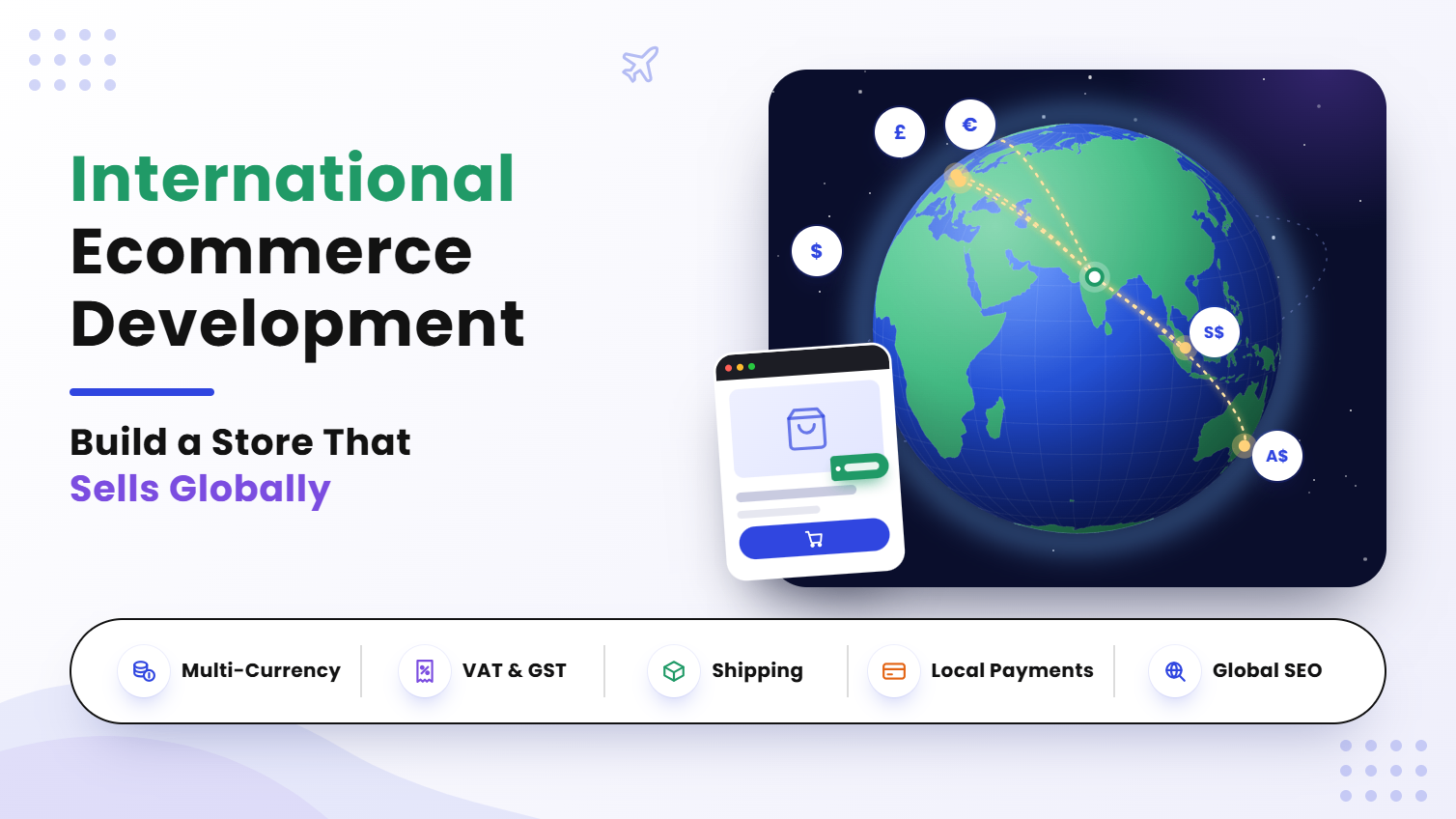
At Ethnic Infotech, we’ve handled this exact problem for brands moving from the UK into Singapore, from India into the US, and from the Netherlands into wider Europe. Here’s the direct answer before we go deeper: expanding a store internationally means solving five things at once, multi-currency pricing, localised checkout, tax compliance like VAT and GST, cross-border shipping rules, and international SEO through hreflang tags. Miss one and the whole expansion stalls, usually at the worst possible moment, which is checkout.
This isn’t theory. It’s what we do for a living, and there are things about international ecommerce development that surprise almost every client on their first international build.
A UK founder emailed us last year with one line: “We’re doing fine at home, but every time we try to sell into Australia, something breaks.” That something is almost never the product. It’s the store. International ecommerce development is the process of rebuilding a store’s currency, language, tax, shipping, and payment logic so it works the same way in Sydney as it does in Southampton, and most stores were never built for that from day one.
At Ethnic Infotech, we’ve handled this exact problem for brands moving from the UK into Singapore, from India into the US, and from the Netherlands into wider Europe. Here’s the direct answer before we go deeper: expanding a store internationally means solving five things at once, multi-currency pricing, localised checkout, tax compliance like VAT and GST, cross-border shipping rules, and international SEO through hreflang tags. Miss one and the whole expansion stalls, usually at the worst possible moment, which is checkout.
This isn’t theory. It’s what we do for a living, and there are things about international ecommerce development that surprise almost every client on their first international build.
Why International Ecommerce Is a Growing Opportunity
Most brands don’t set out to do international ecommerce development on purpose. It happens by accident first, an Australian customer finds the product on Instagram, pays in a currency the store never priced for, and gets hit with a shipping quote that costs more than the item. A few of those a month and the founder starts asking whether it’s worth doing properly.
It usually is. Cross-border ecommerce keeps growing faster than domestic-only retail, and the reason is simple: customers in Singapore, the UK, and Australia already buy from overseas brands constantly. They just expect the basics to work. Local currency. Local-feeling checkout. Duties they can see before they pay, not after.
So the opportunity isn’t really “go global.” It’s “stop losing the international customers you’re already getting.” That’s a very different, much smaller problem to solve, and it’s usually the first real milestone in any international ecommerce development project.
Multi-Currency and Multi-Language: Shopify vs Magento for International Ecommerce Development
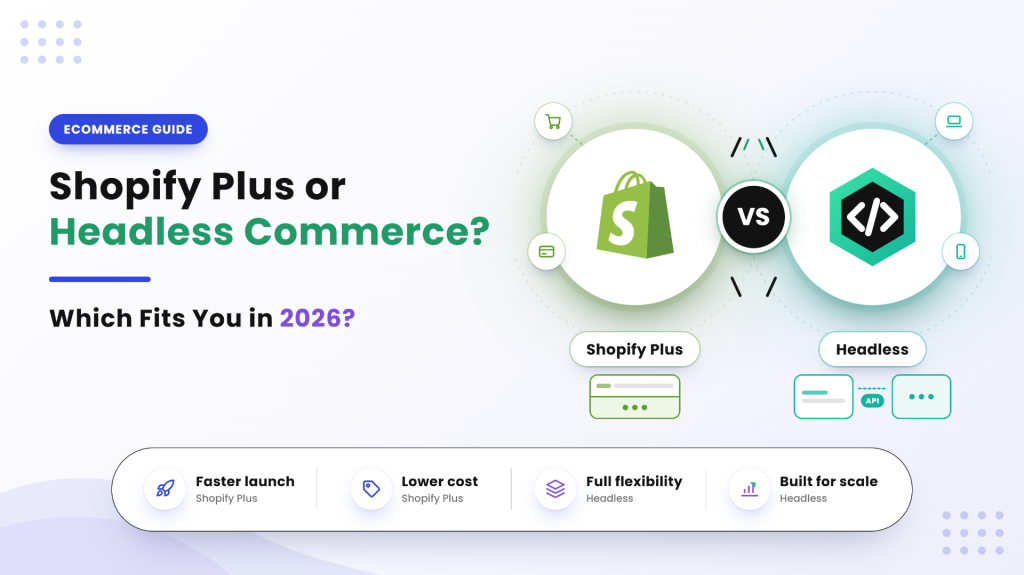
This is the first fork in the road, and it decides a lot of what comes after. Shopify and Magento (Adobe Commerce) handle international ecommerce development in genuinely different ways, not just different menus for the same feature. We’ve covered the broader platform trade-offs in our guide to Shopify Plus vs headless commerce if you want the fuller architecture picture before deciding.
How Shopify Handles Multi-Currency and Multi-Language
Shopify Plus has Shopify Markets built in. You can price in local currency, show local domains or subfolders per region, and localise duties and taxes at checkout without touching the theme code. For a brand doing three to six international markets, this is usually the faster route. Set-up for a first market typically runs two to four weeks once catalog and shipping decisions are locked.
The catch: pricing control is decent but not infinite. If you need country-specific pricing logic tied to B2B contracts or wholesale tiers, you’ll hit walls Shopify Markets wasn’t built to solve.
How Magento and Adobe Commerce Handle It
Magento was built for exactly that kind of complexity. Multi-website and multi-store-view architecture lets you run genuinely separate storefronts per region, each with its own price books, tax rules, and content, all from one backend. It’s more setup work up front. It also gives B2B and catalog-heavy brands room Shopify simply doesn’t have.
We rebuilt a Netherlands-based reptile retailer’s Magento store around exactly this structure, part of our Adobe Commerce development work, and the flexibility to run region-specific catalog rules without duplicating the whole platform was the entire point of staying on Magento instead of migrating off it.
The honest take:
if you’re a product brand with under 5,000 SKUs expanding into two or three new countries, Shopify Plus will get you there faster. If you’re running B2B pricing, wholesale accounts, or a catalog north of 10,000 SKUs across regions, Magento earns its extra setup time. Neither platform makes international ecommerce development automatic, they just remove different pieces of the manual work.
Localisation: Language, Currency, Taxes & Compliance
Currency symbols are the easy 20% of localisation inside any international ecommerce development plan. The hard 80% is tax and compliance, and it’s where most stores actually break.
VAT, GST and Cross-Border Tax Rules
Selling into the UK or EU generally means registering for VAT once you cross a country’s distance-selling threshold, and showing VAT-inclusive pricing at the point customers see it, not buried at checkout. Selling into Australia or Singapore has its own GST rules, and the thresholds aren’t the same numbers as the UK’s. Get this wrong and customers get hit with a surprise charge on delivery, which is one of the fastest ways to generate a one-star review.
- Confirm which countries need VAT or GST registration based on your sales volume there.
- Configure tax rules per region inside the platform, not as a manual spreadsheet workaround.
- Show landed cost (product plus duty plus tax) before checkout, not after. The result is a checkout that doesn’t surprise anyone, which is genuinely the whole goal.
Language localisation matters too, but less than people assume. UK, Australian, and Singaporean customers mostly read English fine. What actually moves conversion is spelling and phrasing that feels local (“colour” not “color,” “postcode” not “zip code”) and currency formatting that matches what a local bank statement would show.
Cross-Border Logistics and Shipping Configuration
Shipping is where international ecommerce development quietly turns into a logistics project. Get shipping zones wrong and every other part of the build, currency, tax, checkout, becomes irrelevant because the customer never completes the order.
Setting Up Shipping Zones Correctly
Don’t build one generic “international” shipping rate. It’s one of the most common shortcuts in rushed international ecommerce development, and it always underprices far markets and overprices close ones. Break zones by actual carrier cost bands, usually three to five tiers, and connect real-time rates from a carrier API where the volume justifies it. For lower-volume markets, flat regional rates work fine, they just need updating quarterly, not left untouched for two years while fuel surcharges creep up.
Customs documentation is the other piece of international ecommerce development nobody plans for early enough. HS codes, commercial invoices, and DDP (delivered duty paid) versus DDU (delivered duty unpaid) terms need deciding before launch, not discovered when the first shipment gets stuck at a border. DDP costs more upfront but avoids the surprise-charge problem mentioned earlier. Most brands we work with land on DDP for their first one or two international markets, then reconsider once volume justifies dedicated freight arrangements.
Payment Gateways for International Ecommerce
A UK Visa card and an Australian one both say “credit card” on the tin, but the gateway behind them needs to actually support local payment preferences or conversion drops hard at checkout. This is the part of international ecommerce development that gets skipped most often, because it looks like it already works in testing.
Stripe and Adobe Commerce’s native payment integrations cover most Western markets well. Singapore and wider APAC often need local rails too, PayNow, GrabPay, or region-specific wallets, alongside the standard card options. Skipping local payment methods isn’t a small oversight. In markets where digital wallets are the default, a card-only checkout can quietly cost 15 to 20% of potential conversions.
Claim-Evidence pair:
International checkout abandonment tends to run higher than domestic. Evidence: Baymard Institute’s checkout research names unexpected extra costs, fees, taxes, and conversion charges, as the leading driver of cart abandonment overall, and PPRO’s payments research has found that 94% of cross-border shoppers expect to pay in their own local currency (2026 data). Both problems are fixable at the platform level before launch, not patched afterward.
SEO for International Ecommerce Stores: hreflang & Region Targeting
You can handle every other part of international ecommerce development correctly, multi-currency, multi-language, tax, shipping, and still show the wrong page to the wrong customer in Google. That’s what hreflang exists to prevent.
Hreflang is an HTML attribute that tells search engines “this page is the English-UK version, this one is the English-Australia version, serve the right one to the right searcher.” Without it, Google might rank your US page for a UK searcher, who then lands on dollar pricing and bounces immediately.
- Map out every regional URL structure first, subfolders like /uk/ and /au/, or country-code domains, before writing a line of hreflang code.
- Add reciprocal hreflang tags across every regional page, each version needs to reference every other version, not just the default.
- Submit region-specific sitemaps to Google Search Central so crawling catches up faster. The result is search visibility that actually matches where your customer is searching from.
One thing we’ve had to explain to almost every client: hreflang is not a ranking factor. It’s a routing signal. It won’t help a weak page rank better. It just makes sure the right regional page shows up for the right person, which matters just as much for conversion as it does for SEO.
How Ethnic Infotech Builds Ecommerce Stores for Global Markets
I’ll be specific here instead of vague, because vague is exactly what this kind of section usually is. Three real projects, three completely different international ecommerce development problems.
We worked on Bedstar, a UK bed and mattress retailer, on Adobe Commerce, focused on catalog discovery and delivery visibility for a market where customers expect precise dispatch dates before they’ll commit to a large purchase. We also built GoodBac, a UK-based personalised probiotic brand, on our Shopify development track, where the international complexity wasn’t currency, it was building a custom quiz flow that still worked cleanly across regional storefronts. And on Blue Lagoon, a Netherlands-based retailer, the international piece was Magento data migration without losing catalog integrity across markets.
None of those three builds solved “international” the same way, because the actual bottleneck was different every time. That’s the part generic advice always misses. A currency plugin doesn’t fix a catalog migration problem, and a hreflang setup doesn’t fix a quiz flow that breaks on a regional subdomain.
We’re an India-based international ecommerce development team (Surat, Gujarat) working with clients across the UK, Singapore, Australia, the US, and Europe, and the same team stays on the project from kickoff to launch. No handoffs partway through, which matters more on international builds than domestic ones, because half the value is one team holding the full picture of currency, tax, and logistics decisions in their head at once.
Ready to Build Your Global Store?
Expanding into international markets requires more than adding currencies. Our ecommerce experts help you build localized storefronts, configure international payments, tax, shipping, and SEO, and create a smoother buying experience for customers worldwide.
Best Practices Before You Launch
These are the habits that separate a smooth international ecommerce development rollout from a bumpy one.
- Price in local currency, never just convert on the fly: Live exchange-rate conversion looks fine until a rate swings and your margin disappears overnight. Set fixed local price points and review them monthly.
- Test checkout from an actual device in that country if you can: VPN testing catches maybe 70% of issues. A real device, or a real person in-market, catches the rest, including payment methods that don’t even show up outside their home region.
- Localise returns policy per region, not globally: UK and EU consumer rights around returns are stricter than many other markets. One generic returns page creates legal exposure, not just a UX gap.
- Keep tax logic inside the platform, not a spreadsheet: Manual VAT and GST tracking works for about a month before someone forgets to update a threshold.
Common Mistakes Brands Make Going Global
Most international ecommerce development mistakes aren’t exotic. They’re the same five, over and over.
- Launching with one flat international shipping rate: It always loses money on far markets and overcharges near ones, and customers notice the second one.
- Skipping VAT or GST registration until forced to: Waiting for a compliance letter is more expensive than registering early, both in fines and in the scramble to fix pricing retroactively.
- Treating hreflang as optional or “nice to have.”: We’ve inherited more than one store where the wrong regional page was ranking for months before anyone noticed traffic wasn’t converting.
- Ignoring local payment preferences: Card-only checkout in a wallet-first market like Singapore is a silent conversion killer nobody notices without dedicated regional analytics.
- Choosing a platform based on what’s popular, not what fits the catalog: Shopify is the default recommendation everywhere online for international ecommerce development. It’s genuinely the wrong call for a 15,000-SKU B2B catalog with wholesale pricing tiers.
FAQ
Q: : Can an ecommerce agency build a store for UK or Australian customers?
A: Yes, and it shouldn’t require a local office to do it well. What matters for international ecommerce development is whether the agency has actually configured VAT, GST, hreflang, and regional shipping before, not just theme design. Ask for a live example in that specific market before committing.
Q: : How do I add multi-currency to a Shopify store?
A: Shopify Plus stores use Shopify Markets, built into the platform, to set local currency pricing, regional domains, and localised duties without custom code. Standard Shopify plans have more limited currency conversion options, so if multi-currency is central to your plan, Shopify Plus is usually the right tier.
Q: : What is hreflang and why does it matter for international ecommerce?
A: Hreflang is an HTML tag that tells Google which regional version of a page to show a given searcher. It’s a small technical detail with an outsized effect on international ecommerce development, because without it the wrong country’s page can rank for the wrong audience, sending UK searchers to a US-priced page and tanking conversion even when the SEO otherwise looks fine.
Q: : Which platform is best for international ecommerce in 2026?
A: It depends on catalog size and complexity, not personal preference. Shopify Plus suits brands under roughly 5,000 SKUs expanding into a handful of markets quickly. Magento or Adobe Commerce suits larger catalogs, B2B pricing, or brands that need region-specific business logic Shopify wasn’t built for.
Q: : How do I handle VAT and GST for cross-border ecommerce?
A: Register once you cross each country’s distance-selling threshold, configure tax rules inside the platform rather than manually, and show landed cost, product plus duty plus tax, before checkout rather than after. This alone prevents most of the delivery-day surprise charges that drive returns and complaints.
Q: : How long does international ecommerce development actually take?
A: A single new market on an existing Shopify Plus store usually takes two to four weeks once catalog and shipping decisions are finalised. A full Magento multi-store build for several regions at once runs closer to two to four months, mostly because of the tax and catalog architecture work upfront.
Q: : Do I need a local business entity to sell in another country?
A: Not always. Most international ecommerce development projects start without one. Many brands sell into the UK, Singapore, or Australia without a local entity, provided they register for the relevant tax scheme (VAT or GST) as a foreign business. A local entity becomes worth considering once volume in that market is high enough to justify local warehousing or a local team.
Conclusion
Good international ecommerce development isn’t one feature you switch on. It’s five separate decisions, currency, localisation, logistics, payments, and SEO, that all have to work together, and most stores that struggle overseas got one of those five wrong, not all of them. Start with the one causing the most customer complaints right now. That’s usually the honest starting point, not the most exciting one.
Ready to Build Your Global Store?
If you’re still deciding between platforms, which ecommerce platform actually fits your catalog is worth reading before anything else, and if custom backend workflows are part of the plan, our note on Adobe Commerce’s admin extension tooling covers what’s possible there. Our full case studies page has more builds beyond the three mentioned above.
Planning your next product, platform, or growth move?
Ethnic Infotech helps teams shape scalable software, sharper customer experiences, and content systems that support real business growth.