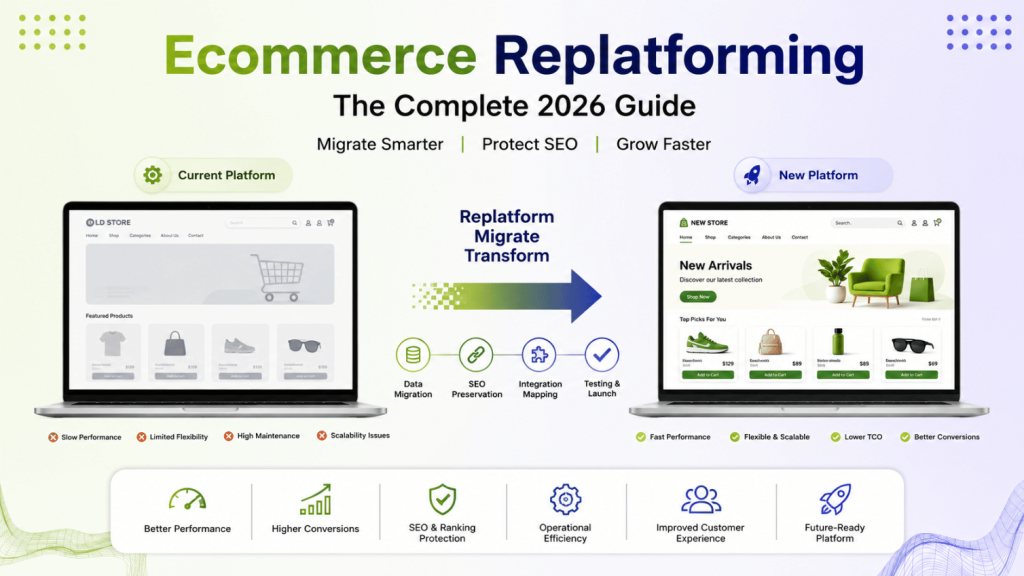

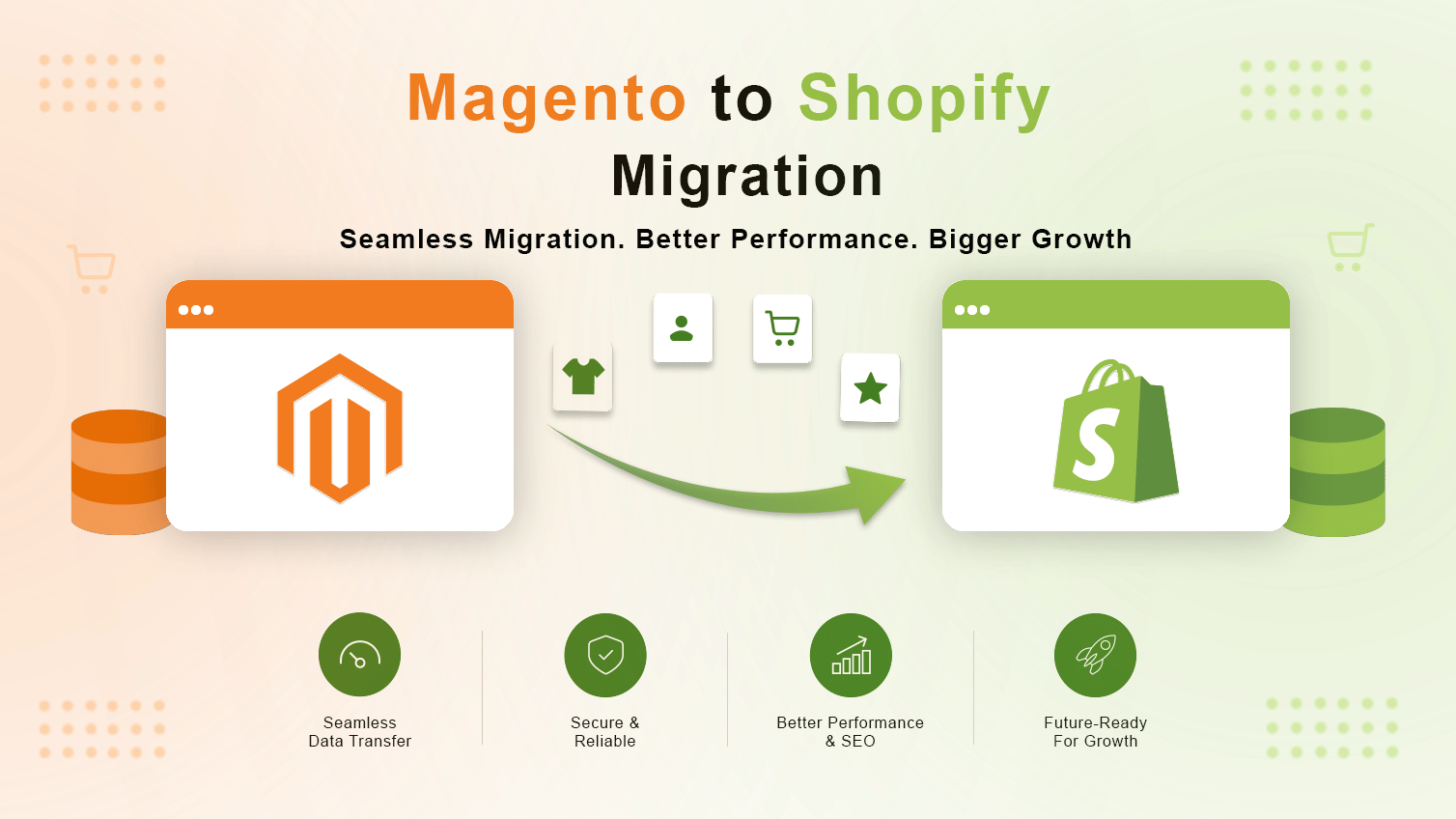
Your Magento store is holding you back and you already know it.
Not because Magento is a bad platform it isn’t. But for most mid-market brands, the maintenance overhead, hosting costs, and developer dependency have grown well past what they originally signed up for. At Ethnic Infotech, we’ve worked on Magento stores since 2021 new builds, upgrades, performance fixes, and headless migrations and the pattern we see repeatedly is merchants running solid stores on brittle infrastructure, waiting for the right moment to move.
This guide covers the complete Magento to Shopify migration process for 2026: what gets moved, what gets lost, what to watch for with SEO, realistic costs for India-based and international brands, and the one decision point most guides skip entirely whether Shopify is actually the right destination.
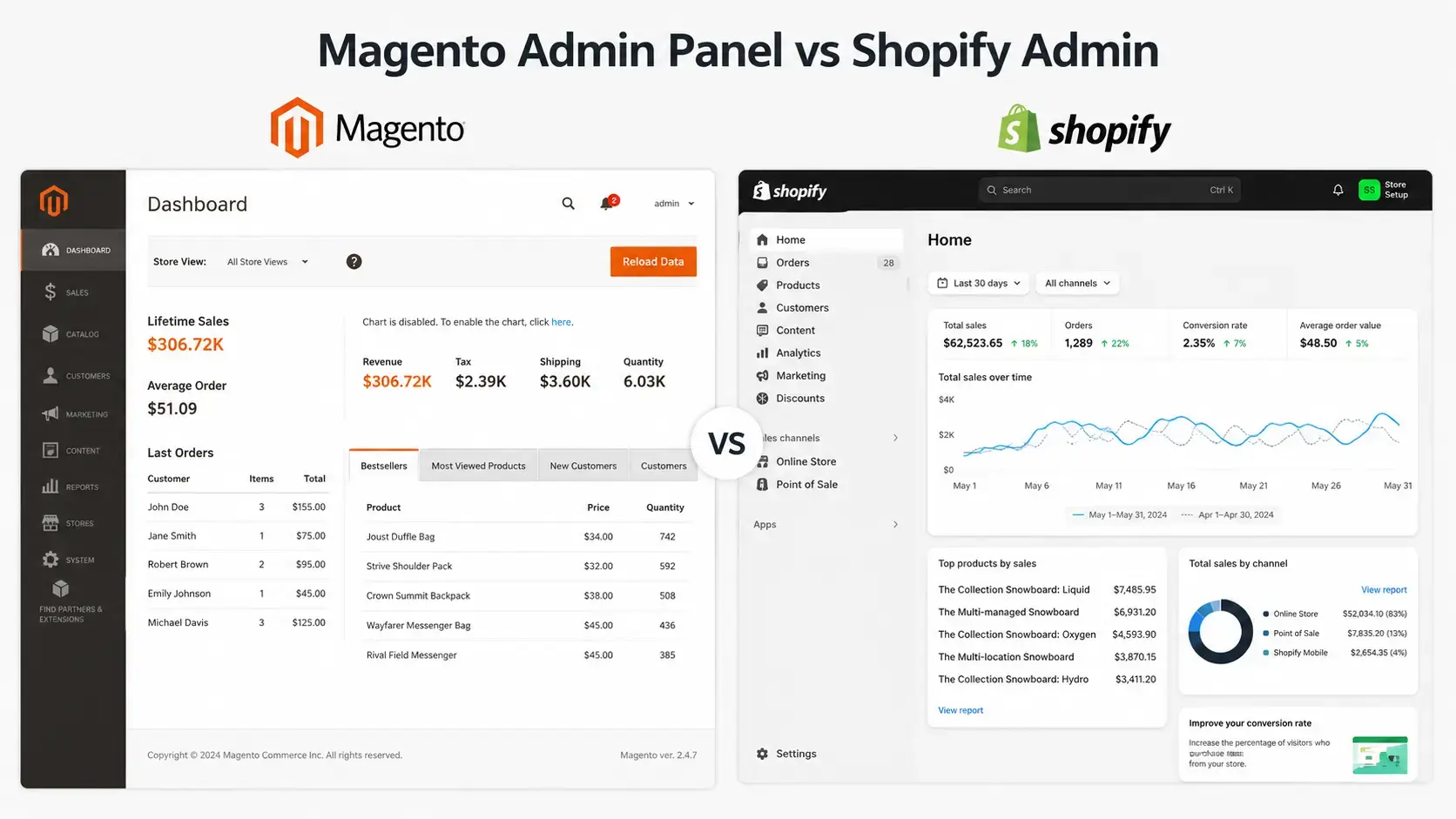
The Real Problem with Magento in 2026
Most merchants don’t leave Magento because of a single breaking point. They leave because small friction compounds.
Server costs creep up. An extension breaks during a Magento 2 patch update. The developer who built the original custom module left two years ago and nobody fully understands it now. A simple homepage banner change takes a support ticket and two days.
That said, I want to be direct about something most migration guides gloss over: Magento is still a strong platform for complex B2B operations, large catalogs, and brands that need custom business logic. If that’s you, this migration may not be the right move. GraphCommerce on top of Magento might serve you better we’ll cover that comparison further down.
But if you’re a D2C brand, an SMB retailer, or a growing ecommerce business that primarily needs a clean, fast, manageable storefront, the reasons to move are compelling.
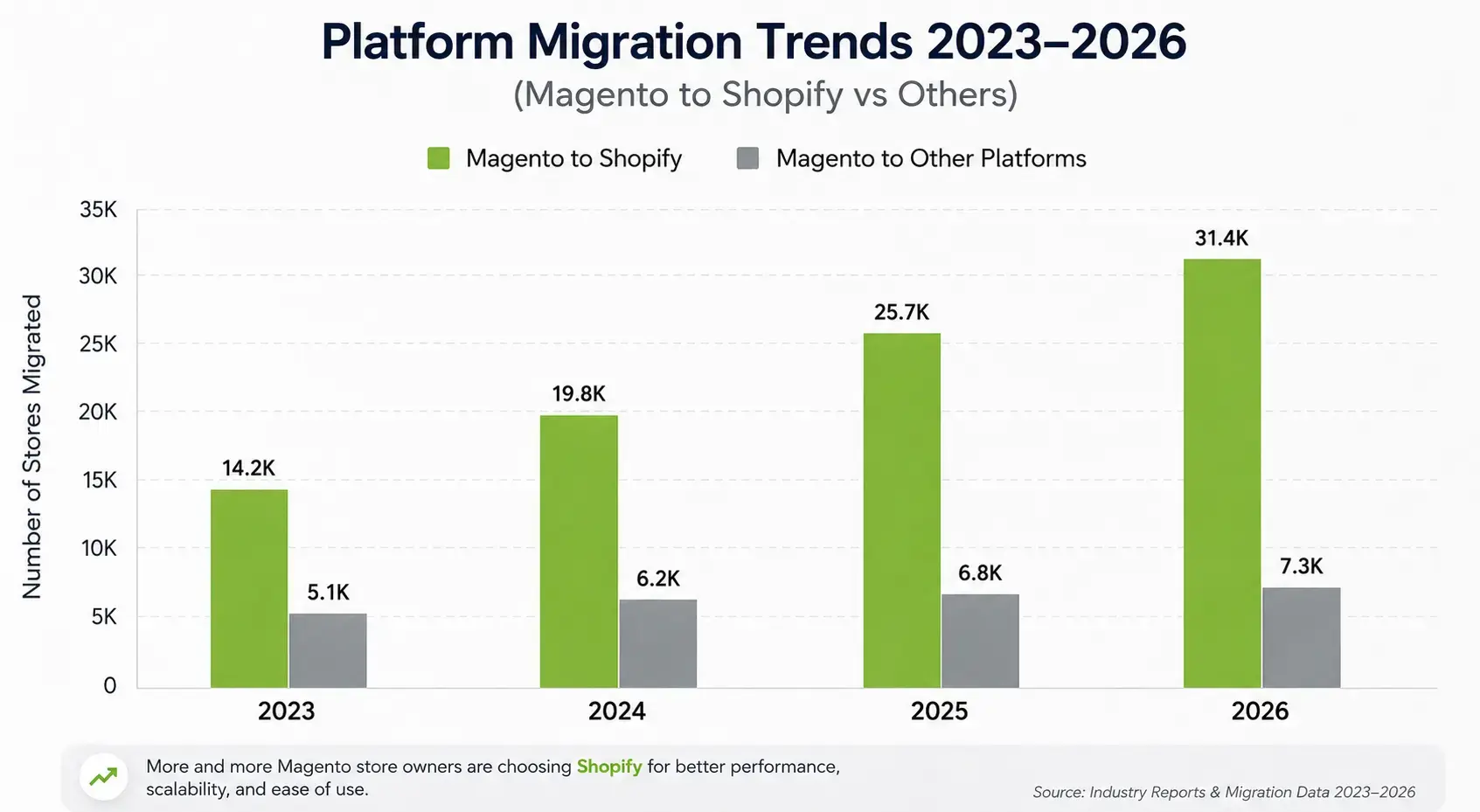
Why the Shift Is Accelerating in 2026
According to Shopify’s 2025 annual commerce report, merchants migrating to Shopify Plus from other enterprise platforms cited three primary drivers: reduced total cost of ownership (68%), faster time-to-launch for new features (54%), and better native app ecosystem coverage (49%).
The Magento 2 end-of-life signals from Adobe aren’t helping confidence either. Adobe Commerce (the paid version) remains supported, but the open-source community around Magento has been thinning since 2023. Security patches still land, but the ecosystem momentum has clearly shifted.
And here’s what doesn’t get talked about enough: Shopify’s checkout conversion rates are genuinely higher for most storefronts. Not because of magic because Shopify has invested billions in checkout optimisation across millions of stores, and the learnings compound. The average Shopify checkout-to-purchase conversion in 2024 was 1.8x higher than custom-built checkout implementations (Baymard Institute, 2024).
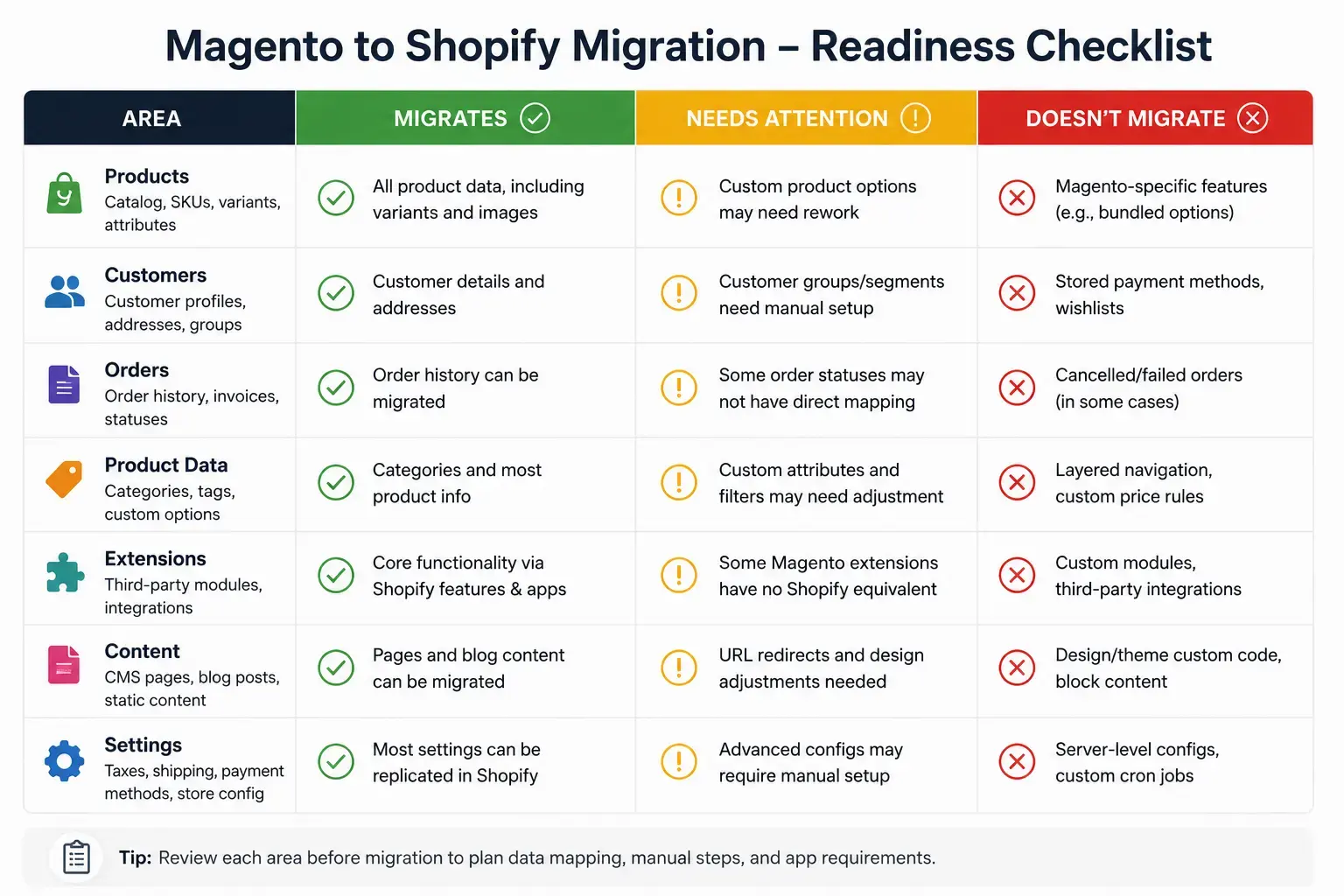
What Gets Migrated: Data, Products, Orders, Customers
This is where migrations get messy if nobody maps it out upfront.
Here’s what a complete Magento to Shopify data migration covers and what it doesn’t.
What Migrates Cleanly
Products and variants SKUs, titles, descriptions, prices, images, attributes, and inventory levels transfer well using tools like Matrixify (formerly Excelify) or LitExtension. The main friction is Magento’s configurable/simple product structure versus Shopify’s product/variant model. They’re similar but not identical, so some catalog restructuring is usually needed for complex attribute sets.
Customer records Email addresses, names, shipping addresses, and order history move across. Passwords can’t migrate directly (different hashing systems), so customers will need to reset their passwords on first login. Plan a post-migration email sequence around this.
Order history Historical orders can migrate for reference and customer service purposes. They won’t be fully functional (no reorder, no live order status), but the data is preserved.
Blog posts and pages Static content migrates, though formatting will need attention. Magento and Shopify use different content structures.
What Doesn’t Migrate Automatically
Custom Magento extensions don’t have direct Shopify equivalents in most cases. This is probably the most common point of friction. If your store relies on a bespoke Magento module a custom B2B pricing engine, a complex ERP sync, a specific loyalty system you’ll need to either find a Shopify app equivalent or build custom functionality.
Tax configurations, especially for complex multi-country or GST setups, need to be rebuilt from scratch in Shopify. Don’t assume they carry over.
Customer groups and tiered pricing (common in B2B Magento stores) require Shopify Plus and app configuration. Standard Shopify doesn’t natively handle B2B pricing tiers the way Magento does.
SEO Considerations During Platform Migration
This is the section where most migrations either go right or cost months of recovery.
The core SEO risk: Magento and Shopify use different URL structures. If your Magento URLs look like /catalog/product/view/id/1234 or /clothing/t-shirts/premium-cotton-tee.html, none of those exist on Shopify after migration. Without proper redirects, every link pointing to those pages from Google, from other sites, from old email campaigns returns a 404.
The 301 Redirect Strategy
Before writing a single line of Shopify theme code, export your complete Magento URL inventory. Every product page, every category page, every blog post, and every CMS page. Map each old URL to its new Shopify equivalent.
Shopify allows bulk 301 redirect uploads via CSV. For a store with 500 products and 50 collection pages, this is manageable in a few hours. For a store with 5,000+ SKUs, it’s a proper project.
The goal is a redirect coverage rate above 95% for pages that currently have any backlinks or Google-indexed traffic. Anything below that and you’re accepting unnecessary ranking loss.
What Changes in Shopify’s URL Structure
Shopify enforces specific URL patterns. Products live at /products/product-handle, collections at /collections/collection-handle. You can’t fully customise these without headless architecture. So if your Magento store had clean SEO-friendly URLs that exactly match what Shopify generates great. If not, redirects are non-negotiable.
Canonical Tags and Duplicate Content
Shopify’s default theme creates duplicate product URLs because products can appear under /products/ both /collections/collection-name/products/. Make sure canonical tags point to the primary /products/ URL. This is a Shopify-specific SEO issue that doesn’t exist in Magento’s default configuration.
According to Moz’s 2024 platform migration case study data, ecommerce stores that implemented full 301 redirect mapping before DNS cutover recovered to pre-migration organic traffic levels within 60–90 days on average. Stores that skipped this step averaged 4–6 months of recovery, with some never fully recovering niche category rankings.
Step-by-Step Magento to Shopify Migration Process
This is the actual sequence we follow at Ethnic Infotech for client migrations. It’s not the only way to do it, but it’s the way that tends to cause the least business disruption.
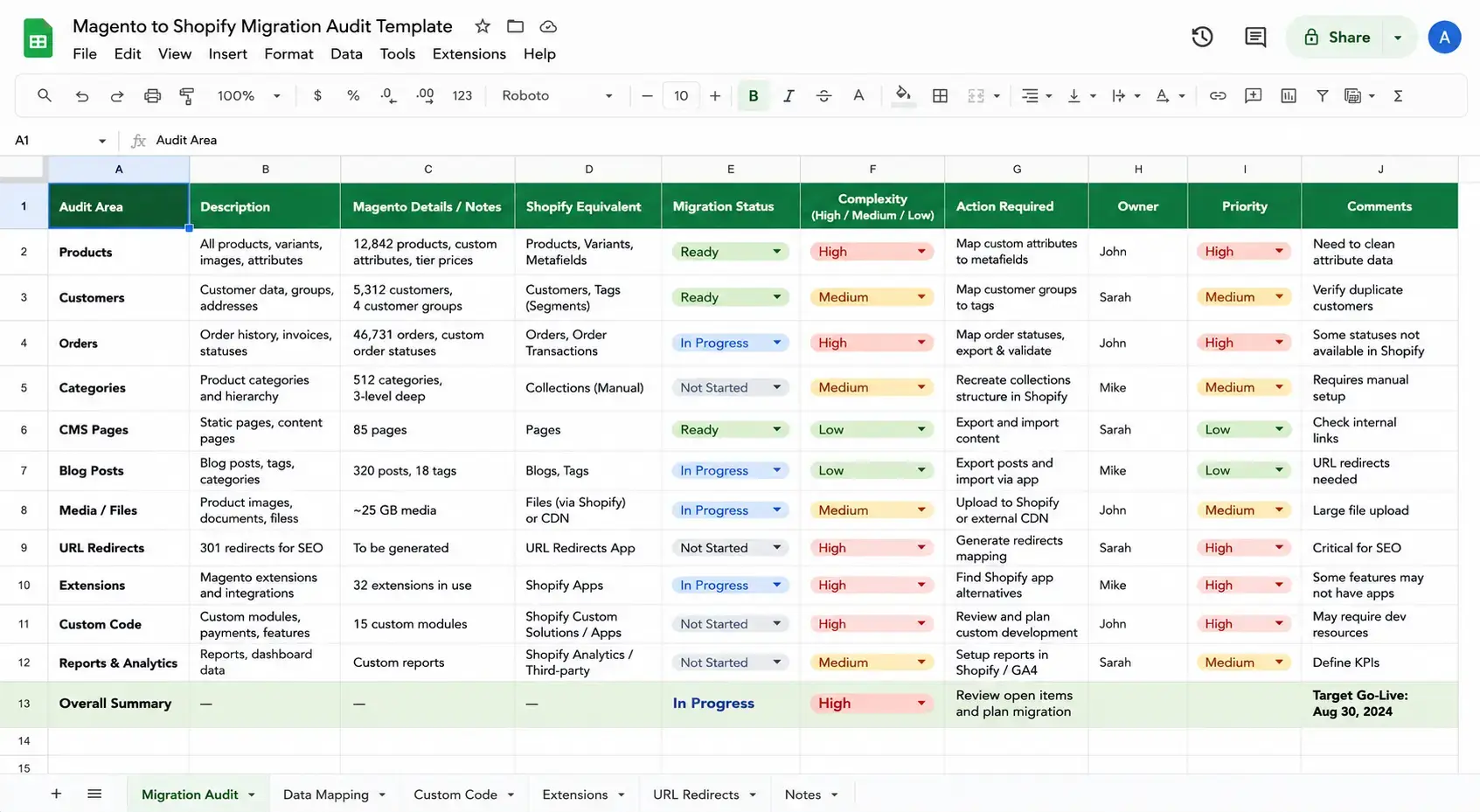
Phase 1: Audit and Scope (Week 1–2)
- Export the full product catalog from Magento and audit SKU count, attribute complexity, and variant structure.
- Identify all custom Magento extensions in use. Categorise each as: find Shopify equivalent app / rebuild custom / deprecate.
- Crawl the live Magento store and export all indexed URLs from Google Search Console.
- Document current page-level organic traffic rankings for your top 50 pages (these are your highest-priority redirect targets).
- Identify all third-party integrations: payment gateways, ERP, email platform, shipping, loyalty, reviews. Each needs a Shopify equivalent mapped.
Phase 2: Shopify Store Build (Week 2–6)
- Set up the Shopify store with correct settings, payment providers, and tax configuration.
- Build or customise the theme to match brand direction don’t just pick a template and call it done. This is your chance to modernise the storefront.
- Import the product catalog using Matrixify. Review the first 100 products manually before running the full import.
- Set up all required Shopify apps as replacements for Magento extensions.
- Rebuild email flows and marketing automations in the new platform.
Phase 3: Data Migration and Testing (Week 6–9)
- Run a full data migration in a staging environment first. Never migrate directly to production.
- Import customer records and historical orders.
- Upload the complete 301 redirect CSV.
- Test the full customer journey end-to-end: browse → product page → add to cart → checkout → order confirmation → email receipt.
- QA all app integrations under real order scenarios.
Phase 4: Launch and Post-Migration (Week 9–12)
- Point DNS to Shopify. This is the point of no return.
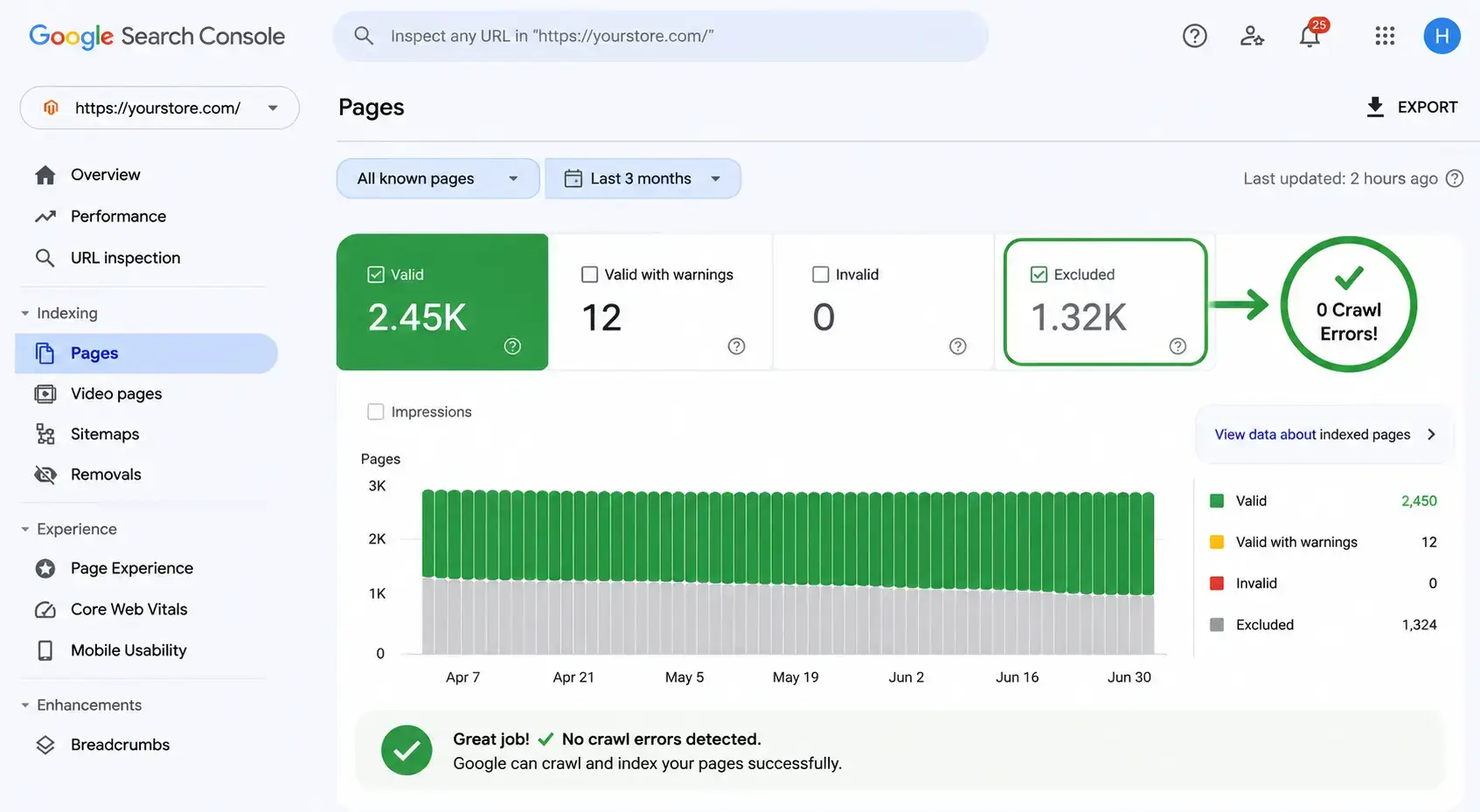
- Monitor Google Search Console for crawl errors and new 404s in the first 72 hours. Fix anything that surfaces.
- Watch organic traffic daily for the first two weeks. Small dips are normal. Big dips (40%+) signal missing redirects.
- Send the password reset email sequence to your customer base.
- Run a post-launch audit 30 days post-migration. The result is a stable, fully operational Shopify store.
Ready to Migrate Your Store?
Seamlessly migrate from Magento to Shopify with zero data loss, SEO preservation, and minimal downtime. Let our Shopify experts handle everything while you focus on growing your business.
Magento to Shopify vs Magento to GraphCommerce
Most guides skip this entirely. I won’t.
Not every Magento migration should go to Shopify. Some stores genuinely need the catalog depth, B2B business logic, and backend control that Magento provides but they also need a faster, more modern frontend. That’s where GraphCommerce comes in.
GraphCommerce is a headless storefront framework that sits on top of Magento (or Adobe Commerce) and delivers a React-based frontend via GraphQL. You keep all your Magento business logic, catalog structure, and backend integrations. You replace only the frontend.
We did this exact migration for Tong Garden a well-known snack brand in Southeast Asia. Their Magento backend handled a complex catalog with multilingual support and regional pricing. Moving to Shopify would have required rebuilding that entire logic layer. Instead, we implemented GraphCommerce on top of their existing Magento infrastructure, replacing only the storefront layer and significantly improving page load speed and mobile conversion.
Here’s how the two paths compare:
| Factor | Magento → Shopify | Magento → GraphCommerce |
|---|---|---|
| Best for | D2C, SMB, simpler catalog | B2B, large/complex catalog |
| Backend change | Full replatform | Magento backend stays |
| Custom logic | Rebuild in Shopify/apps | Preserved in Magento |
| Maintenance | Lower (Shopify managed) | Higher (Magento hosting) |
| Dev dependency | Lower | Higher |
| Cost | ₹1.5L – ₹8L | ₹4L – ₹15L+ |
| Timeline | 4–12 weeks | 8–20 weeks |
| SEO risk | Moderate (manageable with redirects) | Low (URL structure unchanged) |
| Shopify ecosystem | Full access | Not applicable |
The honest guidance: if your store has more than 10,000 SKUs, complex B2B pricing rules, or custom business logic that took 2+ years to build in Magento, GraphCommerce is probably worth the conversation. If you’re running a cleaner D2C operation and the main problem is maintenance overhead and storefront speed, Shopify is the right move.
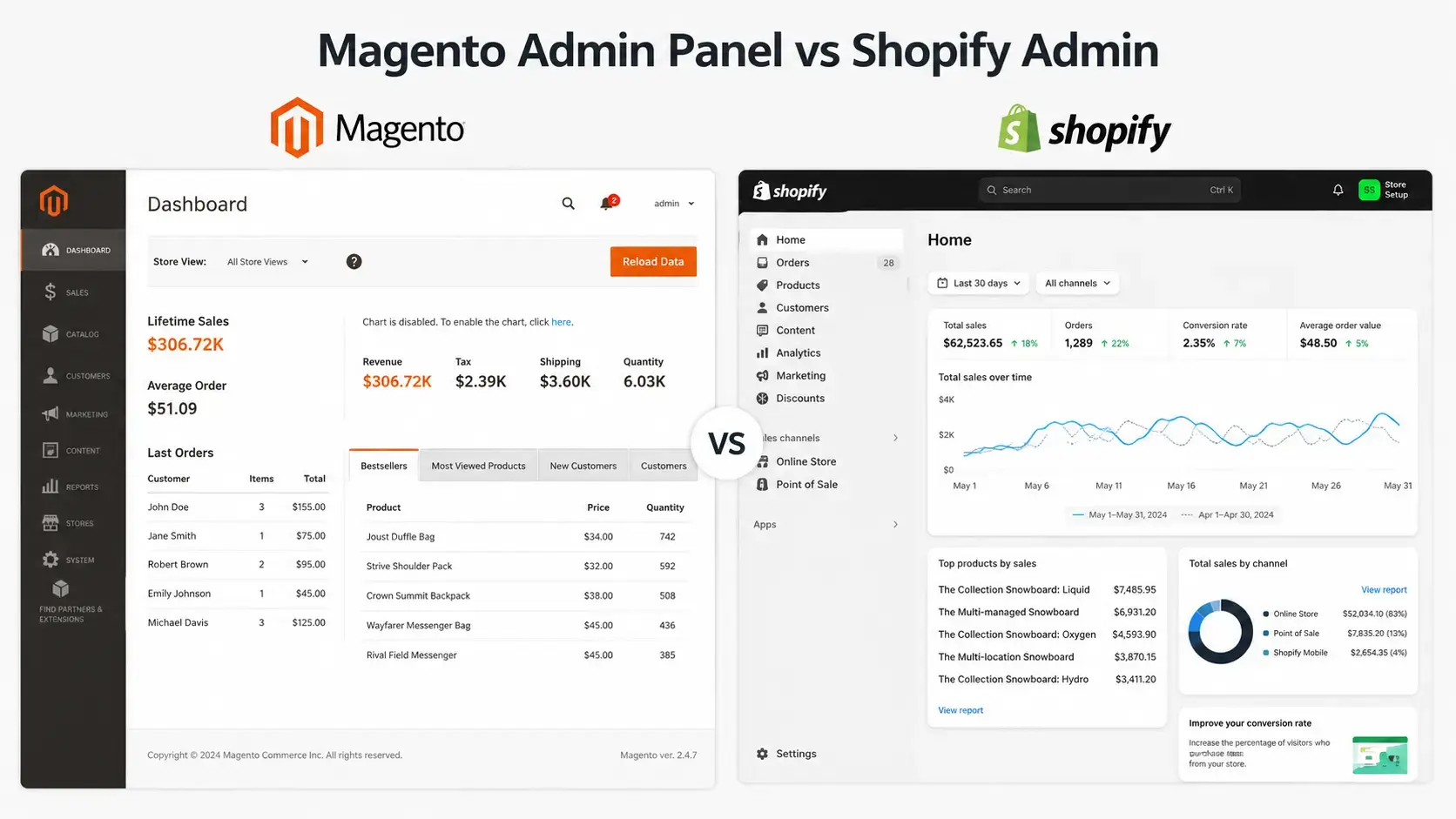
Cost and Timeline for Magento-to-Shopify Migration
The honest answer: it depends on catalog size, custom functionality, and how much storefront redesign is involved.
Here are realistic ranges for India-based agency delivery (which is what Ethnic Infotech offers):
Small Store Migration (Under 500 SKUs, minimal custom extensions)
Timeline: 4–6 weeks
Cost: ₹1.5 lakh – ₹3 lakh
What’s included: Data migration, basic theme customisation, standard Shopify apps, 301 redirects, QA, launch support
Mid-Size Migration (500–3,000 SKUs, some custom extensions)
Timeline: 6–10 weeks
Cost: ₹3 lakh – ₹6 lakh
What’s included: Full data migration with mapping, custom theme build, app integrations (ERP/email/reviews), full SEO redirect mapping, post-launch support
Complex Migration (3,000+ SKUs, multiple custom extensions, B2B logic)
Timeline: 10–16 weeks
Cost: ₹6 lakh – ₹12 lakh+
What’s included: Full catalog restructuring, custom app development or API integrations, headless consideration, complete storefront redesign, post-launch optimisation phase
For international clients (UK, Australia, Singapore), costs are typically quoted in USD/GBP/AUD and run 2–3x the India rates depending on timezone support, project management structure, and scope complexity.
The Hidden Costs Most Quotes Leave Out
Shopify subscription: Shopify Basic starts at $29/month; Shopify Advanced at $299/month; Shopify Plus at $2,300/month. Factor this into your ongoing cost model.
App costs: Replacing Magento extensions with Shopify apps often adds $50–$300/month in ongoing SaaS costs. Some teams are surprised by this.
Post-migration SEO monitoring: Budget for at least 60–90 days of active monitoring and fixing after launch. This isn’t optional it’s insurance.
Post-Migration Checklist for Ecommerce Stores
Don’t close out the project until every item on this list is confirmed.
Technical
- [ ] All 301 redirects uploaded and verified (test at least 20% manually)
- [ ] Google Search Console ownership verified on new Shopify domain
- [ ] Sitemap submitted to Google Search Console
- [ ] All product canonical tags pointing to /products/ URL (not collection path)
- [ ] Page speed tested on Shopify (PageSpeed Insights target: 80+ mobile)
- [ ] SSL confirmed active
- [ ] All payment gateways tested with real transactions (small amount)
- [ ] Tax calculations verified for all customer regions you serve
SEO
- [ ] Meta titles and descriptions reviewed for top 50 pages don’t let Shopify defaults stand
- [ ] Image alt text audited (Magento migration often strips alt text)
- [ ] Internal linking structure rebuilt Magento category breadcrumbs don’t auto-carry to Shopify
- [ ] Schema markup (Product, Organisation, BreadcrumbList) confirmed in theme
Operations
- [ ] Customer password reset email sequence scheduled
- [ ] Order notification emails tested (Shopify default notifications are barebones customise them)
- [ ] Fulfillment workflows tested end-to-end
- [ ] Inventory sync with warehouse/ERP confirmed
- [ ] All staff accounts set up with correct permission levels
- [ ] Analytics (GA4 / Meta Pixel / relevant ad platforms) verified firing correctly
60-Day Post-Launch
- [ ] Organic traffic baseline established in GA4 (30-day post-migration)
- [ ] Google Search Console crawl errors reviewed and resolved weekly
- [ ] Any 404 errors that appeared post-launch addressed
- [ ] Conversion rate baseline set for first 30 days of Shopify operation
Our Take on Magento-to-Shopify Migrations in 2026
We’ve been hands-on with Magento since Ethnic Infotech’s early days new builds, Magento 2 upgrades, performance work, headless migrations. And we’ve now done enough Shopify migrations to have a reasonably honest view.
The migrations that go smoothly share one thing: the client knows exactly why they’re moving and what they’re willing to rebuild. The hard migrations happen when a brand moves to Shopify hoping to escape Magento complexity, only to try to replicate every Magento custom behaviour inside Shopify using a stack of apps. That defeats the purpose.
Shopify’s strength is its simplicity and managed infrastructure. If you try to make it into Magento, you’ll end up with neither platform’s advantages.
My recommendation: if you’re moving to Shopify, commit to using the platform the way it’s designed to work. Rebuild your catalog structure to match Shopify’s model. Use native features where they exist. Only add apps where there’s genuine business need. That’s where Shopify migrations actually deliver the maintenance and velocity improvements people migrate for in the first place.
FAQ
Is it worth migrating from Magento to Shopify in 2026?
For most D2C brands and growing retailers, yes. Shopify reduces server and maintenance overhead significantly, offers a stronger native app ecosystem, and has consistently higher checkout conversion data than custom-built alternatives. The switch makes most sense when your Magento store’s primary problems are developer dependency and operational friction not catalog complexity or custom B2B logic, where Adobe Commerce may still be the better fit.
Will I lose SEO rankings when migrating from Magento to Shopify?
You can avoid major ranking loss with proper preparation. The key is a complete 301 redirect map covering all indexed Magento URLs, submitted before the DNS cutover. Stores that do this well typically return to pre-migration traffic levels within 60–90 days. Stores that skip redirect mapping can take 4–6 months to recover, and some category rankings may not return. Plan the redirects before you plan the theme.
How long does a Magento to Shopify migration take?
A straightforward migration under 500 SKUs, standard functionality typically takes 4–6 weeks with a focused delivery team. Mid-size stores (500–3,000 SKUs) with some custom extensions generally run 6–10 weeks. Complex migrations involving large catalogs, custom business logic, or significant storefront redesign take 10–16 weeks. Timeline is driven primarily by catalog size, extension mapping, and the level of theme customisation required.
What is the cost of migrating from Magento to Shopify in India?
India-based Magento to Shopify migration costs range from approximately ₹1.5 lakh for a small, clean store migration up to ₹8–12 lakh for complex builds requiring custom development, B2B logic rebuilding, or full storefront redesign. Ethnic Infotech provides scoped estimates after an initial audit the catalog size and custom extension inventory are the two biggest cost drivers. Ongoing Shopify subscription costs (from $29/month) and app costs (typically $50–$300/month) are additional to the migration fee.
Ready to Plan Your Migration?
If you’re evaluating a Magento to Shopify migration and want a straight conversation about what it’ll actually involve for your store catalog size, extensions, SEO risk, timeline, and realistic cost book a free consultation with the Ethnic Infotech team.
We’ve worked across Magento, Shopify Plus, Adobe Commerce, and GraphCommerce since 2021, with live stores delivered for international clients in the UK, Singapore, Australia, and India. No sales deck. No generic scoping template. Just a direct conversation about your store’s specific situation.
Planning your next product, platform, or growth move?
Ethnic Infotech helps teams shape scalable software, sharper customer experiences, and content systems that support real business growth.