
Your dev team just told you the theme can’t do what marketing wants for the next campaign. That’s usually the moment the Shopify Plus vs headless commerce question stops being theoretical and starts being urgent.
At Ethnic Infotech, we get this question almost every month from brands doing somewhere between $3M and $30M in revenue. Here’s the direct answer: Shopify Plus works best for brands under roughly $10M that want speed, simplicity, and a smaller engineering footprint. Headless commerce, whether that’s Shopify Hydrogen or a decoupled frontend like GraphCommerce, starts paying off once site performance, checkout customization, or multi-channel complexity begin capping your growth. Most brands don’t actually need to guess here. The decision usually comes down to three things: your current Lighthouse or PageSpeed score, how hard your theme is fighting your product roadmap, and whether a 1% conversion lift is worth six figures to your business this year.
Get this wrong and there are two ways to lose. Overpay for headless infrastructure you don’t need yet, and you’ve burned budget and months of dev time on complexity that wasn’t the bottleneck. Or stay on a stock Shopify Plus theme past the point it can carry you, and you bleed conversions quietly, month after month, on a platform you’ve already outgrown.
Before You Decide: The Problem Most Teams Are Actually Facing
Nobody wakes up wanting to rebuild their storefront. Usually it starts smaller than that. A marketing team wants a new landing page format the theme can’t render cleanly. A checkout flow needs a custom step for a subscription product. Or the app stack has grown so heavy that the homepage takes four seconds to paint on mobile, and the CRO agency keeps flagging it in every audit.
None of that means you need headless. It means something in your current setup has hit a ceiling, and you need to figure out whether that ceiling is real or just a theme problem you can fix for a fraction of the cost.
What’s the Real Difference Between Shopify Plus and Headless Commerce?
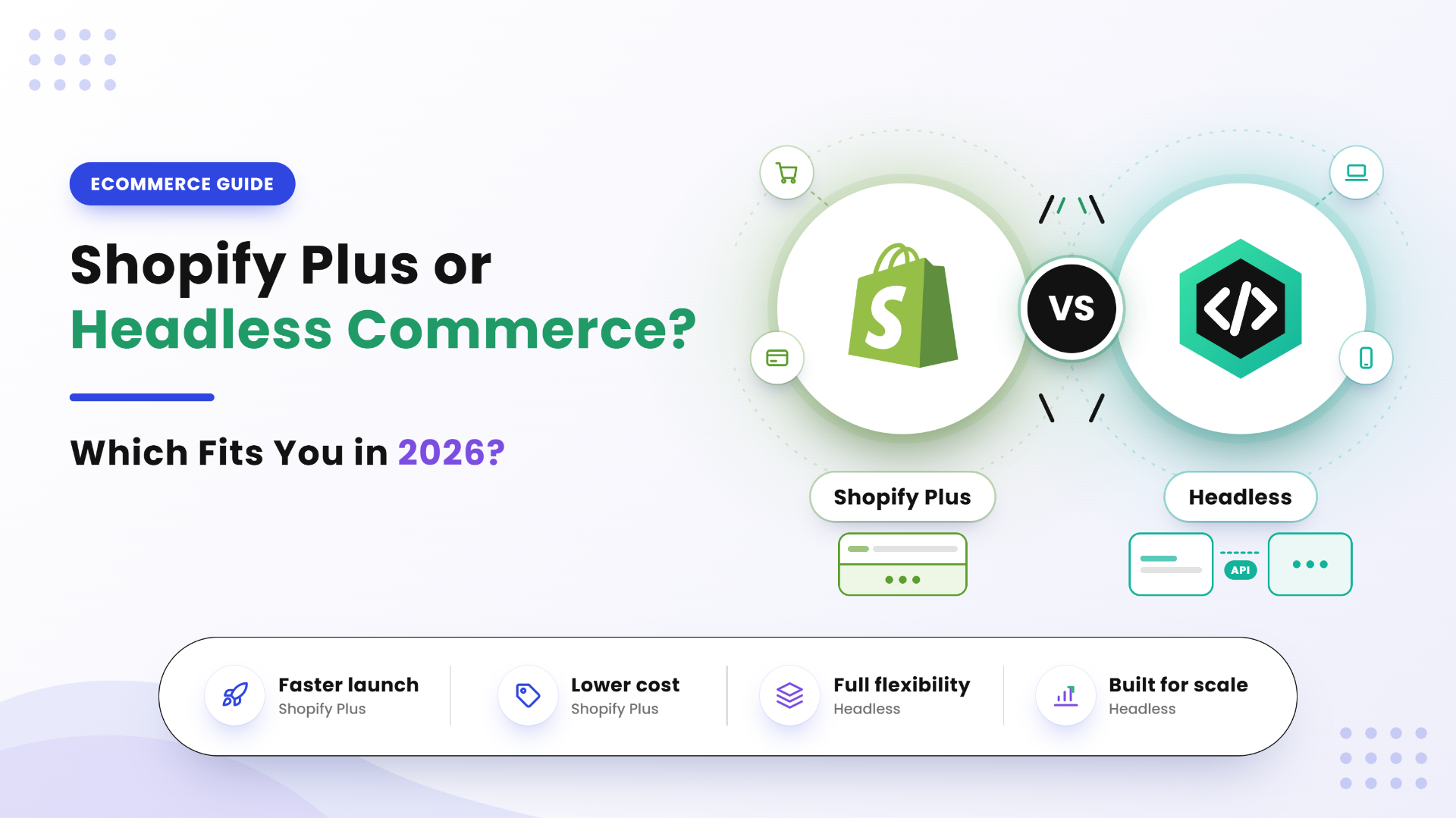
Shopify Plus is Shopify’s enterprise tier: the same platform, same checkout, same admin, but with higher API limits, more automation through Shopify Flow, and support for multiple storefronts under one account. Headless commerce vs Shopify Plus isn’t really an apples-to-apples fight, though, because headless isn’t a competing platform. It’s an architecture choice you can layer on top of Shopify Plus itself.
How Shopify Plus Works Out of the Box
A standard Shopify Plus store runs on Shopify’s Liquid templating engine. The frontend and backend are bundled. You install a theme, customize it, add apps for reviews, upsells, and email capture, and the whole thing renders server-side through Shopify’s hosting. It’s fast to launch. Most builds we’ve run go from kickoff to live store in 6 to 10 weeks.
How Headless Decouples Frontend From Backend
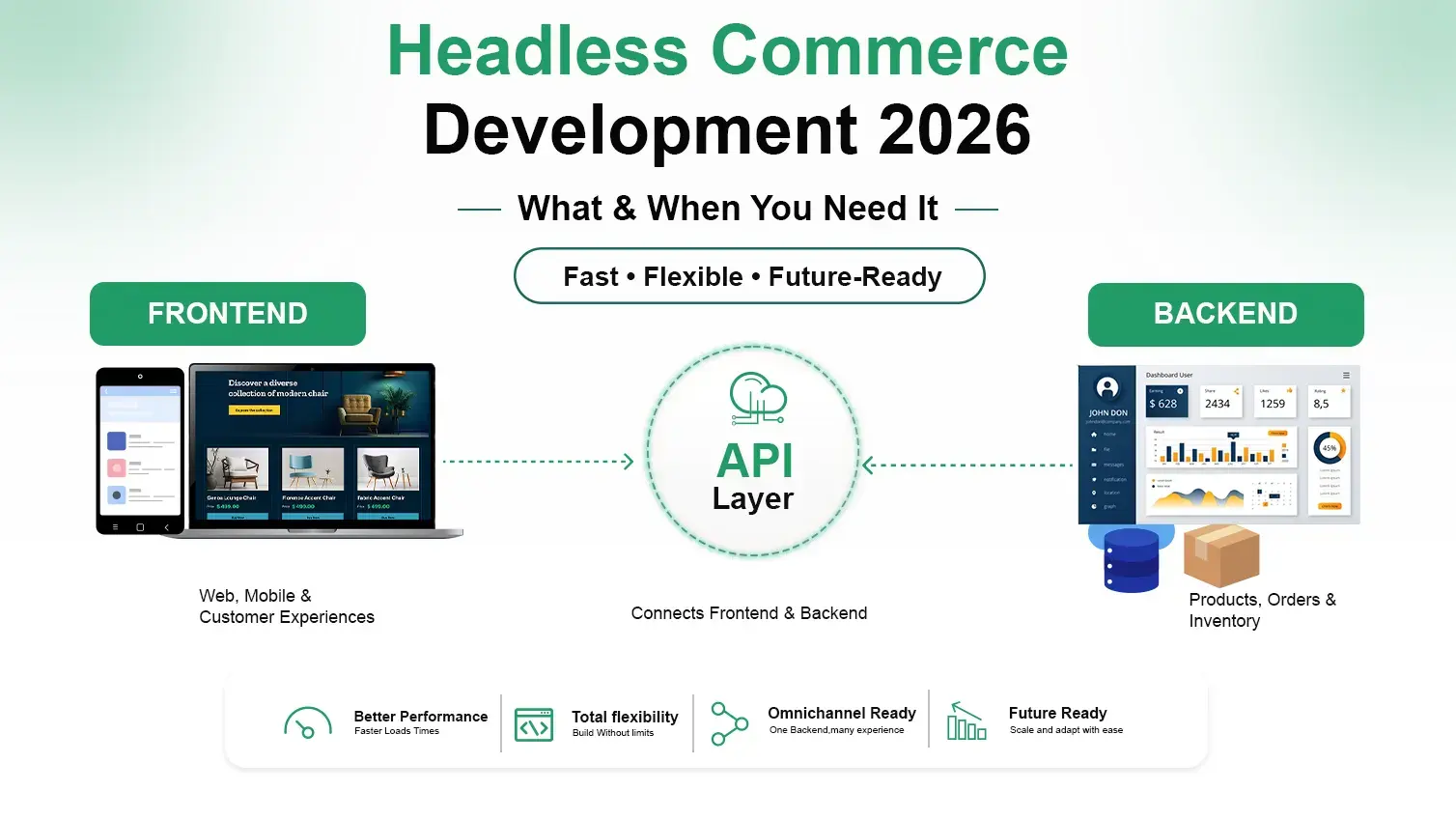
Headless commerce for Shopify separates the storefront (what customers see and click) from the commerce backend (inventory, orders, checkout, payments). Shopify Hydrogen, Shopify’s own React framework, talks to Shopify’s Storefront API and renders a custom frontend anywhere you want, on Oxygen hosting or elsewhere. GraphCommerce does something similar for Adobe Commerce and Magento backends. The backend keeps running the store. The frontend becomes something your team builds and owns.
Performance and Speed: Who Actually Wins?
This is where most Shopify Plus vs headless commerce conversations actually start, and honestly, it’s the right place to start. Speed isn’t a vanity metric here. Baymard Institute’s checkout usability research, built on more than a decade of large-scale testing, has consistently found that checkout design and flow problems are frequently the sole reason shoppers abandon a purchase they’d already committed to, and every added delay compounds that friction somewhere in the funnel.
Where Standard Shopify Plus Themes Hit a Ceiling
Here’s a hot take: most Shopify Plus performance problems aren’t Shopify’s fault. They’re app bloat. A store running 15 to 20 apps, each injecting its own JavaScript, review widget, or tracking pixel, will choke even a well-built theme. We’ve audited stores where a single “free” loyalty app added 400KB of render-blocking JS.
App Bloat and Lighthouse Score Examples
To give a rough sense of the range we see: a lean Shopify Plus theme with under 8 apps typically lands in the 70s to low 80s on mobile Lighthouse performance. Stack that same theme up to 25+ apps, and it’s common to see scores drop into the 30s or 40s. These are illustrative ranges based on the audits we run, not a single client’s exact numbers, but the pattern holds across almost every heavily app-loaded store we’ve looked at.
What Headless Improves, and What It Doesn’t Fix Automatically
A headless frontend gives you full control over what loads, when, and how. You can lazy-load below the fold, ship less JavaScript by default, and skip apps that inject their own scripts into the DOM. That’s a real, measurable win. Google’s web.dev case study on Vodafone Italy found that a 31% improvement in Largest Contentful Paint alone drove 8% more sales on an otherwise identical page, with no other changes. But speed gains aren’t automatic just because you went headless. A poorly built headless storefront with an unoptimized image pipeline and no caching strategy can be just as slow as a bloated Shopify Plus theme. Headless buys you the option to be fast. It doesn’t guarantee it.
Cost and Timeline Comparison
Shopify Plus limitations around frontend flexibility are the main thing pushing brands toward headless, but cost is usually what stops the Shopify Plus vs headless commerce conversation cold. Here’s roughly how the two paths compare for a mid-market brand:
| Factor | Shopify Plus Theme Build | Headless Build (Hydrogen / GraphCommerce) |
|---|---|---|
| Setup cost band | $15K to $50K | $60K to $180K+ |
| Build timeline | 6 to 10 weeks | 12 to 20 weeks |
| Ongoing maintenance | Lower, mostly app and theme updates | Higher, requires frontend dev resourcing |
| Hosting | Included with Shopify Plus | Oxygen (Hydrogen) or separate hosting, plus CDN |
| Team needed | Shopify developer, occasionally a designer | Frontend engineers (React), backend/API integration |
These bands shift depending on catalog size, integration count, and how custom the checkout needs to be, but the ratio holds. Headless is usually 3 to 4 times the upfront investment, with a meaningfully longer path to launch.
Signs You’re Ready for Headless
Deciding when to go headless ecommerce isn’t about hitting a magic revenue number. It’s about whether your current setup is actively costing you money or momentum. This is usually where the Shopify Plus vs headless commerce debate stops being abstract.
Revenue and Traffic Thresholds
In our experience, headless rarely pencils out below roughly $8M to $10M in annual revenue, simply because the build and maintenance cost needs enough traffic and order volume to justify it. Above that range, especially with traffic spikes from paid campaigns or influencer drops, the performance gains start showing up directly in conversion rate.
Multi-Region, Multi-Brand, or Complex Checkout Needs
If you’re running multiple storefronts across regions with different currencies, tax rules, or promotional logic, or if your checkout needs custom steps Shopify’s native checkout can’t support, that’s a strong signal. So is running multiple brands off a shared backend where the frontend experience needs to look completely different for each.
Signs Shopify Plus Alone Still Makes Sense
Not every growing brand needs to go headless, and I’ll say this plainly because most agencies won’t: if you’re under $10M in revenue and your Lighthouse score is in a reasonable range once you trim your app stack, stop reading about headless and go fix your theme instead. A focused Shopify Plus build with a lean app stack, proper image optimization, and a well-structured theme can outperform a rushed headless build every time. We’ve seen it happen. Headless done poorly is worse than Shopify Plus done well.
A Simple Decision Framework
Score yourself honestly on the following. Give yourself one point for each “yes.”
- Your mobile Lighthouse performance score is consistently below 50, even after trimming unnecessary apps.
- You’re running 20 or more apps and can’t reasonably cut that number.
- Marketing or product regularly asks for frontend changes your theme can’t support without a workaround.
- You operate multiple storefronts, currencies, or brand experiences off one backend.
- You’ve calculated that a 1% conversion lift is worth six figures or more to your business annually.
- You have, or can hire, dedicated frontend engineering capacity for ongoing maintenance.
Score 4 or more, and headless is worth a serious architecture conversation. Score 2 or fewer, and your money is better spent fixing the Shopify Plus setup you already have.
Common Mistakes Brands Make With This Decision
We see the same handful of mistakes on nearly every Shopify Plus vs headless commerce project that comes across our desk.
Going headless to fix an app-bloat problem. The single most common mistake we see. Teams blame the platform when the real issue is 30 apps fighting each other for the DOM. Audit and cut the app stack first. It’s a fraction of the cost of a rebuild, and it often fixes 70% of the perceived speed problem on its own.
Underestimating ongoing frontend maintenance. A headless storefront isn’t “set it and forget it.” Someone on your team, or an agency, needs to own frontend releases, dependency updates, and performance monitoring indefinitely. Budget for that before you sign off on the build.
Rebuilding checkout logic that Shopify already handles well. Shopify’s native checkout is fast, trusted, and PCI-compliant out of the box. Don’t rebuild it from scratch inside a headless architecture unless you have a genuinely custom requirement. Most brands don’t.
Skipping a real cost-benefit calculation before committing. “Headless feels more modern” isn’t a business case. Run the numbers: current conversion rate, expected lift, build cost, and maintenance cost over 18 to 24 months. If the math doesn’t clearly favor headless, it’s not time yet.
What We Learned Migrating a Snack Brand Off a Heavier Setup
We worked on Tong Garden’s storefront in partnership with Thirteen Ideation, moving the customer-facing experience from a heavier setup onto GraphCommerce while keeping the existing backend intact for order and inventory management. The goal wasn’t a full platform rip-and-replace. It was reducing frontend overhead so pages felt faster and the path from campaign to cart got shorter.
What we’d tell a client considering the same move: keep the backend where it already works well, and treat the frontend as the thing you’re actually rebuilding. That single decision cuts both cost and risk substantially, because you’re not re-platforming your entire commerce operation, just changing how customers experience it. You can read the full breakdown in our Tong Garden headless commerce case study.
Conclusion
The Shopify Plus vs headless commerce decision isn’t about which platform is “better.” It’s about which one matches where your business actually is right now. Pick based on your growth stage, your Lighthouse score, and a real cost-benefit number, not on which architecture sounds more impressive in a pitch deck. Most brands don’t need headless. The ones that do, know it because they’ve already outgrown what Shopify Plus alone can carry.
Talk to Our Headless Commerce Team
If you’re staring at a slow Lighthouse score and can’t tell whether it’s an app problem or an architecture problem, that’s exactly the kind of question worth a real conversation instead of another blog post. Ethnic Infotech has shipped both Shopify Plus storefronts and headless commerce builds for brands across the US, UK, Singapore, and Australia, and we’ll tell you honestly which one your business needs, not which one is more expensive to build. For more context on how platform choice plays out across Shopify, Magento, and headless, see our guide to choosing the best ecommerce platform for SMEs, D2C, and B2B brands. You can also see how a Shopify Plus build looks in practice in our Zolamod case study.
Book a free architecture consultation: Talk to our headless commerce team and share your current platform, monthly revenue range, and what’s actually pushing you to consider a change. No sales deck, just a straight answer about whether Shopify Plus or headless fits your 2026 roadmap.
Planning your next product, platform, or growth move?
Ethnic Infotech helps teams shape scalable software, sharper customer experiences, and content systems that support real business growth.